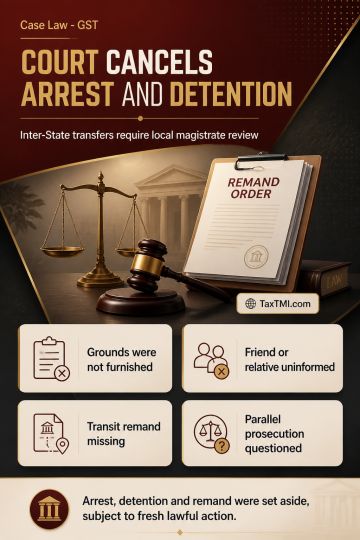
Arrest safeguards and transit remand requirements invalidated detention following inter-State transfer without communicated grounds or magistrate auth...
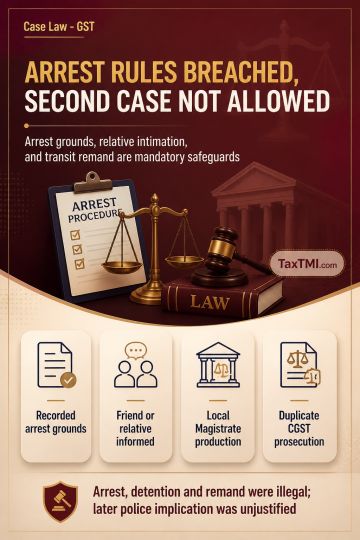
Arrest safeguards require disclosed grounds, relative intimation and transit remand, while duplicate prosecution under the CGST framework is unsustain...
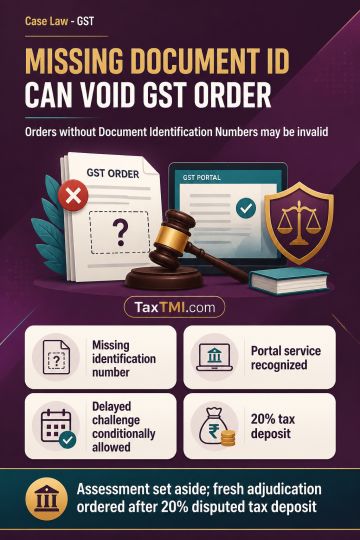
Document Identification Number defects can invalidate GST assessments, with delayed challenges entertained conditionally where patent irregularities e...
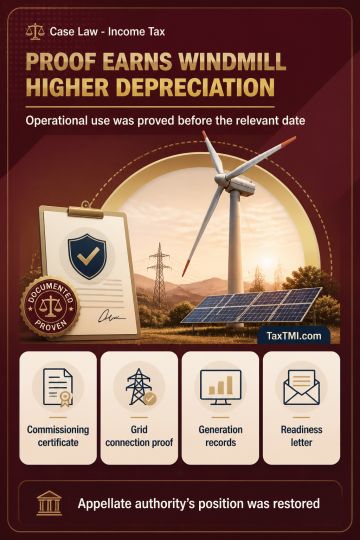
Windmill commissioning evidence supported higher depreciation where grid connection and electricity generation proved operational use before the relev...
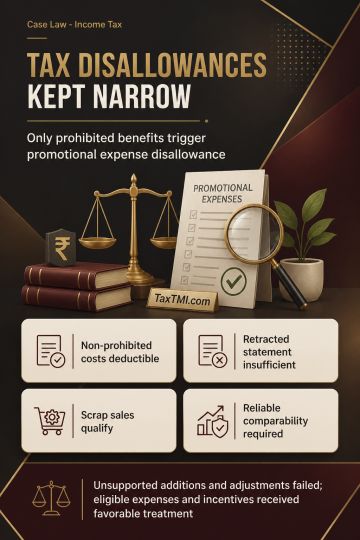
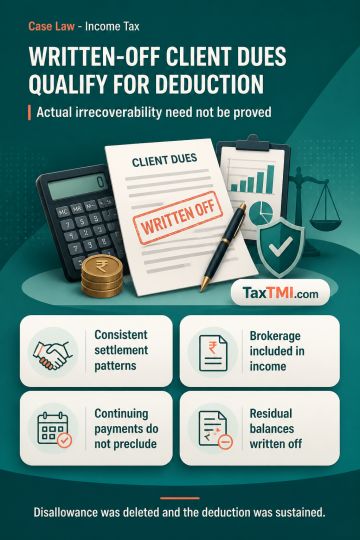
Pharmaceutical promotion and transfer-pricing comparability principles limited disallowances, while uncorroborated search allegations and unsupported ...
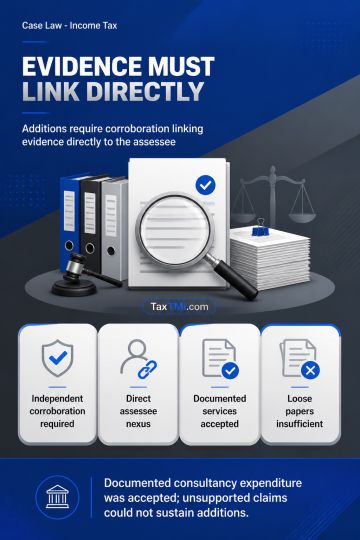
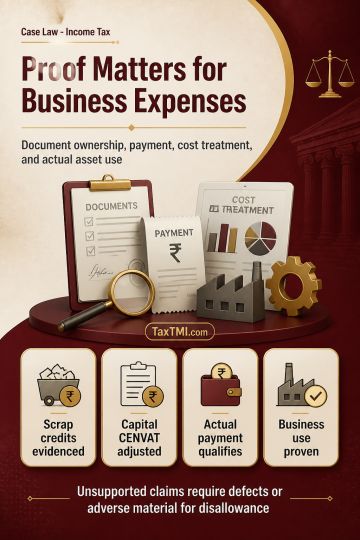
Business expenditure substantiation supports scrap credits, statutory payments and expense claims, while depreciation requires proof of actual busines...
The court examined the interpretation of "reasons to believe" u/s 110 of the Customs Act, 1962, regarding seizure of goods. A previous case had left the interpretation open for examination in other cases. A circular stipulated that at the time of seizure, a Panchnama should clearly mention the reasons to believe the goods are liable for confiscation. There was a dispute over whether the driver produced relevant documents at the time of seizure. The petitioner admitted that documents were produced later at the customs office, implying the driver did not carry them initially. An e-way bill generated shortly before the seizure showed alleged discrepancies. However, under Article 226, the court cannot examine disputed issues. The petitioner failed to make out a case, leading to the dismissal of the writ petition.
The court examined the interpretation of "reasons to believe" u/s 110 of the Customs Act, 1962, regarding seizure of goods. A previous case had left the interpretation open for examination in other cases. A circular stipulated that at the time of seizure, a Panchnama should clearly mention the reasons to believe the goods are liable for confiscation. There was a dispute over whether the driver produced relevant documents at the time of seizure. The petitioner admitted that documents were produced later at the customs office, implying the driver did not carry them initially. An e-way bill generated shortly before the seizure showed alleged discrepancies. However, under Article 226, the court cannot examine disputed issues. The petitioner failed to make out a case, leading to the dismissal of the writ petition.
Note: It is a system-generated summary and is for quick reference only.
 TaxTMI
 of 4792





 Join Channel


 TaxTMI