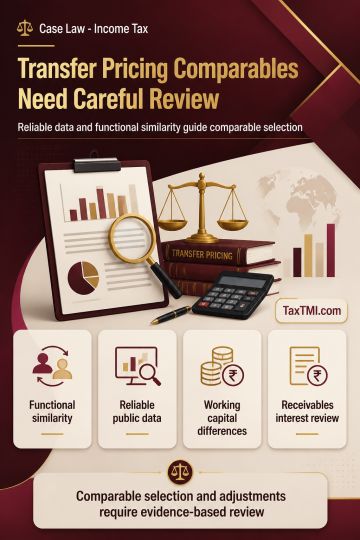
Transfer pricing comparability requires functional alignment, reliable financial data, and careful review of working capital and receivables adjustmen...
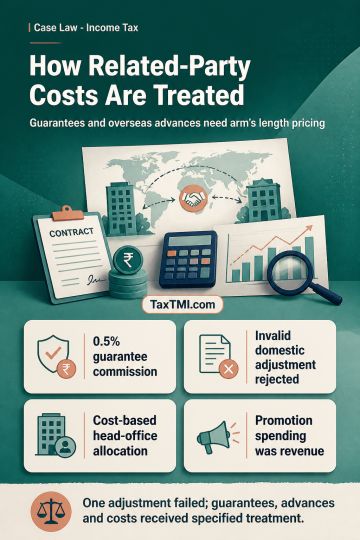
Transfer pricing rules require benchmarking corporate guarantees and associated-enterprise advances, while invalid domestic-transaction adjustments ca...
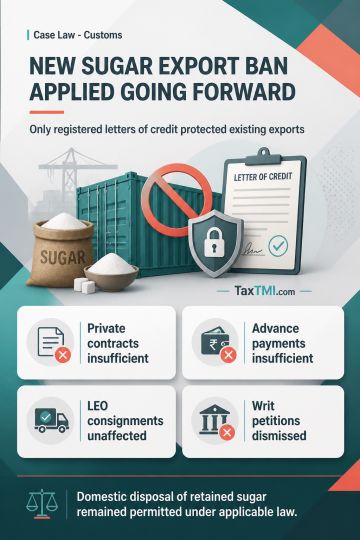
Prospective sugar export prohibition required registered letters of credit; private contracts and export quotas created no enforceable continuation ri...
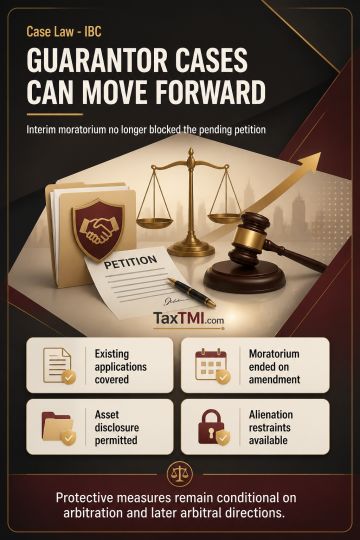
Retroactive interim-moratorium exclusion permits protective asset disclosure and preservation measures against personal guarantors pending arbitration...
The court examined the interpretation of "reasons to believe" u/s 110 of the Customs Act, 1962, regarding seizure of goods. A previous case had left the interpretation open for examination in other cases. A circular stipulated that at the time of seizure, a Panchnama should clearly mention the reasons to believe the goods are liable for confiscation. There was a dispute over whether the driver produced relevant documents at the time of seizure. The petitioner admitted that documents were produced later at the customs office, implying the driver did not carry them initially. An e-way bill generated shortly before the seizure showed alleged discrepancies. However, under Article 226, the court cannot examine disputed issues. The petitioner failed to make out a case, leading to the dismissal of the writ petition.
The court examined the interpretation of "reasons to believe" u/s 110 of the Customs Act, 1962, regarding seizure of goods. A previous case had left the interpretation open for examination in other cases. A circular stipulated that at the time of seizure, a Panchnama should clearly mention the reasons to believe the goods are liable for confiscation. There was a dispute over whether the driver produced relevant documents at the time of seizure. The petitioner admitted that documents were produced later at the customs office, implying the driver did not carry them initially. An e-way bill generated shortly before the seizure showed alleged discrepancies. However, under Article 226, the court cannot examine disputed issues. The petitioner failed to make out a case, leading to the dismissal of the writ petition.
Note: It is a system-generated summary and is for quick reference only.
 TaxTMI
 of 4784







 Join Channel


 TaxTMI