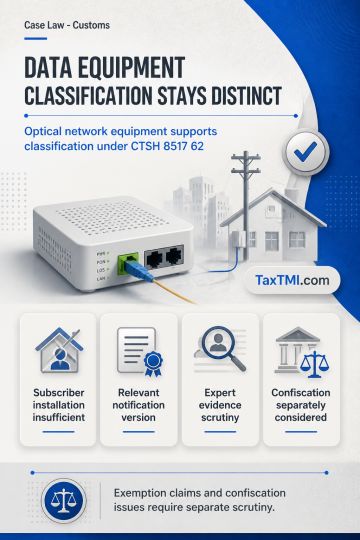
Composite inpatient healthcare supply may retain exemption despite MRP medicine billing, while separate taxable sale characterisation remains disputed...
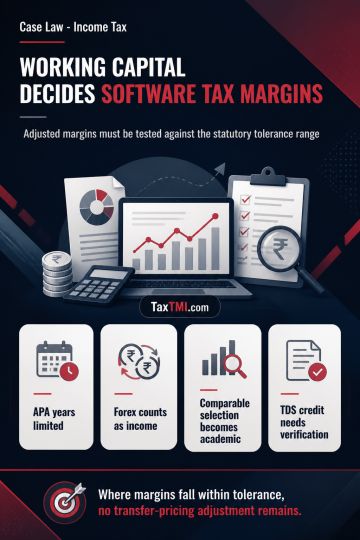
Working-capital adjustment determines whether software-services transfer-pricing margins fall within the statutory tolerance range, eliminating any ad...
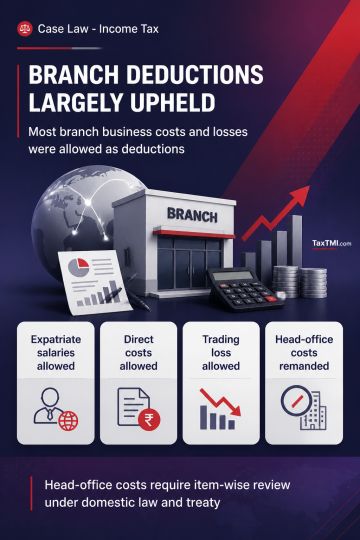
Permanent establishment deductions upheld for expatriate salaries, direct costs and trading losses, while head-office costs require fresh classificati...
Data transmission equipment classification under CTSH 8517 62 remains distinct from residual classification, with exemption evidence requiring scrutin...
Page of 4788
Press 'Enter' after typing page number.
721 to 740 of 95749 Results
❮
❯
❯❯
0 / 200
Expand Note
Add to Folder
No Folders have been created
+
Are you sure you want to delete "My most important" ?
The assessee, a foreign company, earned network transportation fees from its Indian associated enterprise (AE), Damco India Private Limited (DIPL). The Assessing Officer (AO) treated these fees as Fees for Technical Services (FTS) and royalty under the Income-tax Act and India-Netherlands Double Taxation Avoidance Agreement (DTAA). The assessee contended that the fees were business income not taxable in India due to the absence of a Permanent Establishment (PE). The AO rejected the assessee's explanation and taxed the fees as FTS and royalty. The Dispute Resolution Panel (DRP) upheld the AO's decision, citing similar additions in previous years, although the Tribunal had deleted identical additions. Following the Tribunal's order in the assessee's own case for other assessment years, the Income Tax Appellate Tribunal (ITAT) directed the AO to delete the impugned addition on account of receipt of network fees from DIPL.
The assessee, a foreign company, earned network transportation fees from its Indian associated enterprise (AE), Damco India Private Limited (DIPL). The Assessing Officer (AO) treated these fees as Fees for Technical Services (FTS) and royalty under the Income-tax Act and India-Netherlands Double Taxation Avoidance Agreement (DTAA). The assessee contended that the fees were business income not taxable in India due to the absence of a Permanent Establishment (PE). The AO rejected the assessee's explanation and taxed the fees as FTS and royalty. The Dispute Resolution Panel (DRP) upheld the AO's decision, citing similar additions in previous years, although the Tribunal had deleted identical additions. Following the Tribunal's order in the assessee's own case for other assessment years, the Income Tax Appellate Tribunal (ITAT) directed the AO to delete the impugned addition on account of receipt of network fees from DIPL.
Note: It is a system-generated summary and is for quick reference only.
 TaxTMI
 of 4788







 Join Channel


 TaxTMI