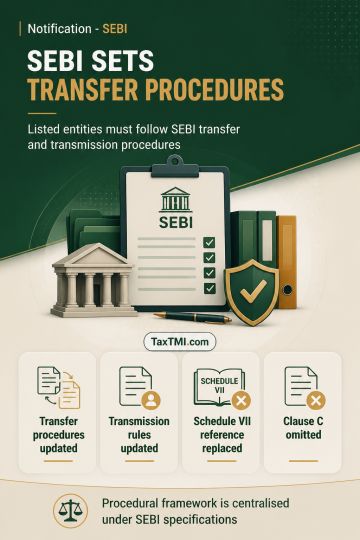
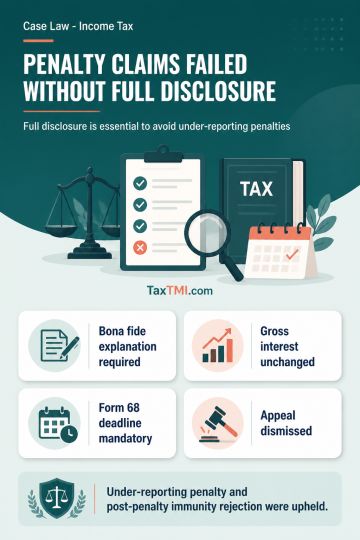
Bona fide disclosure requirements govern under-reporting penalties, and post-penalty immunity applications cannot secure available statutory protectio...
Certificate-of-origin verification procedure governs preferential customs benefits; denial without retroactive verification was set aside with consequ...
Disciplinary Committee jurisdiction and mandatory investigation requirements invalidated cancellation of an insolvency professional's registration and...
Retention of seized property survives where recorded reasons support proceeds of crime, while stayed investigation periods are excluded from limitatio...
Once the original reassessment orders u/s 148 were quashed, they ceased to exist legally. The rectification order u/s 154 was premised on the quashed orders, which could not be revived or corrected. Section 154 could only be invoked if a valid order capable of rectification existed. Since the original orders were non-existent after being quashed, invoking Section 154 was impermissible. Additionally, the condition u/s 149(1)(b) requiring income escaping assessment to be Rs. 50 lakhs or more was not fulfilled. Consequently, the rectification order was unsustainable and quashed by the High Court.
Once the original reassessment orders u/s 148 were quashed, they ceased to exist legally. The rectification order u/s 154 was premised on the quashed orders, which could not be revived or corrected. Section 154 could only be invoked if a valid order capable of rectification existed. Since the original orders were non-existent after being quashed, invoking Section 154 was impermissible. Additionally, the condition u/s 149(1)(b) requiring income escaping assessment to be Rs. 50 lakhs or more was not fulfilled. Consequently, the rectification order was unsustainable and quashed by the High Court.
Note: It is a system-generated summary and is for quick reference only.
 TaxTMI
 of 4790















 Join Channel


 TaxTMI