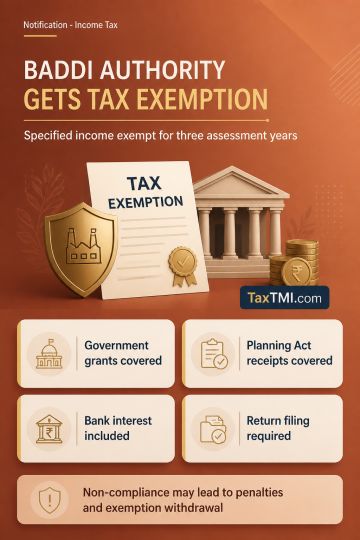
Specified income of Baddi Barotiwala Nalagarh Development Authority receives conditional tax exemption, retrospectively covering its designated assess...
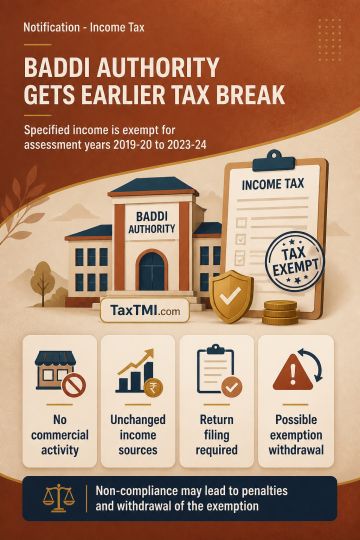
Specified development authority income receives retrospective tax exemption, subject to non-commercial activity, unchanged income sources, and return-...
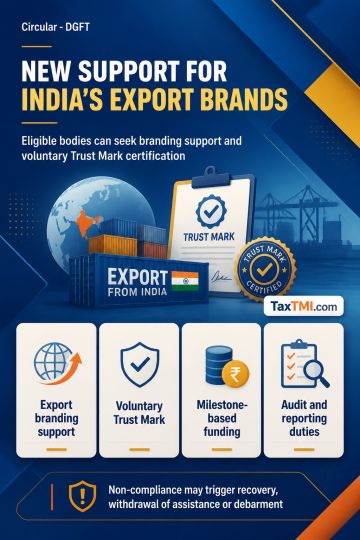
Unified Brand India framework introduces voluntary Trust Mark certification and funding support for export branding, packaging and global promotional ...
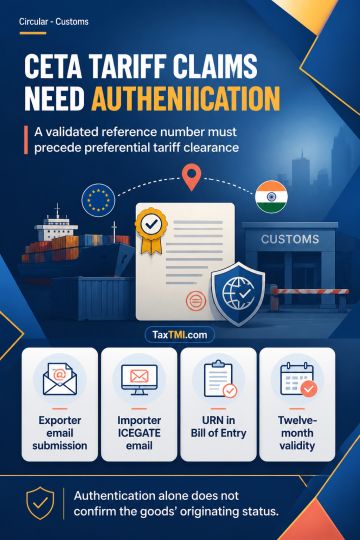
Origin Declaration authentication governs preferential tariff claims under India-UK CETA, requiring a validated reference number before import clearan...
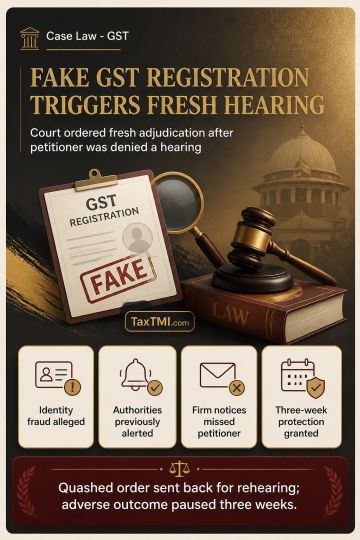
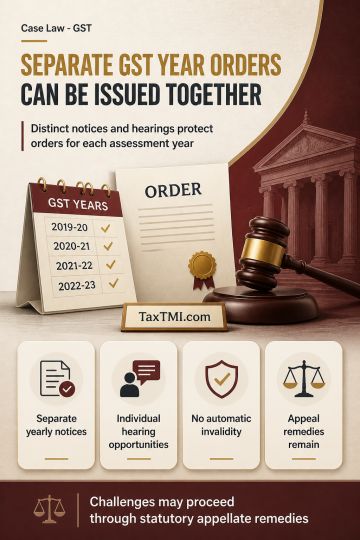
Separate assessment orders for different years remain valid when distinct notices and hearing opportunities prevent prejudice from combined proceeding...
The assessee's income received from Indian customers as Fee for Technical Services (FTS)/Fee for Included Services (FIS) u/s 9(1)(vii) of the Act and Article 12(4) of India-USA Double Taxation Avoidance Agreement was examined. The Assessing Officer (AO) observed that the assessee provided user-specific services involving human intervention, beyond mere content services. However, the AO's findings were self-contradictory, acknowledging the assessee as an aggregation service provider but denying its role as a mere aggregator. The AO failed to establish that the assessee provided technical services through its online platform or transferred technical knowledge, know-how, or skills to enable independent utilization by recipients. Relying on precedents, the Appellate Tribunal held that the receipts did not qualify as FIS under Article 12(4) of the India-USA tax treaty, allowing the assessee's appeals.
The assessee's income received from Indian customers as Fee for Technical Services (FTS)/Fee for Included Services (FIS) u/s 9(1)(vii) of the Act and Article 12(4) of India-USA Double Taxation Avoidance Agreement was examined. The Assessing Officer (AO) observed that the assessee provided user-specific services involving human intervention, beyond mere content services. However, the AO's findings were self-contradictory, acknowledging the assessee as an aggregation service provider but denying its role as a mere aggregator. The AO failed to establish that the assessee provided technical services through its online platform or transferred technical knowledge, know-how, or skills to enable independent utilization by recipients. Relying on precedents, the Appellate Tribunal held that the receipts did not qualify as FIS under Article 12(4) of the India-USA tax treaty, allowing the assessee's appeals.
Note: It is a system-generated summary and is for quick reference only.
 TaxTMI
 of 4798






 Join Channel


 TaxTMI

