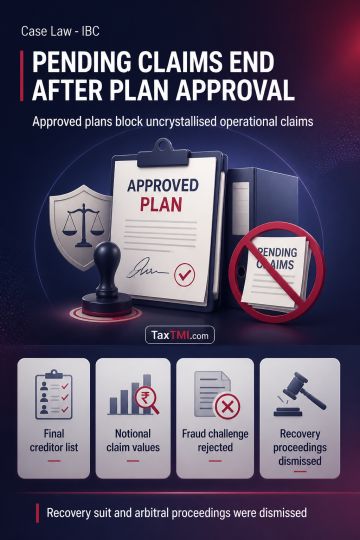
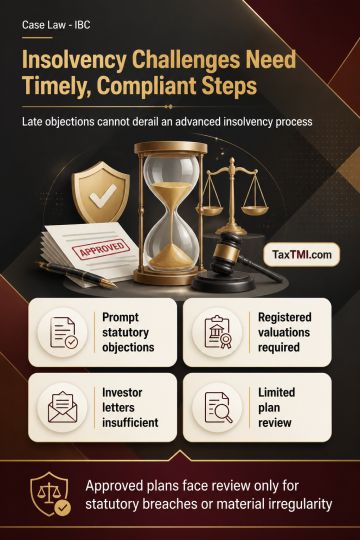
Clean slate principle extinguishes uncrystallised operational claims and bars continuation of pending recovery and arbitral proceedings after plan app...
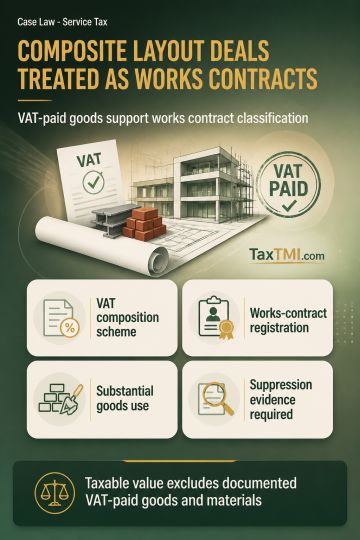
Works contract classification governs composite layout-development contracts where VAT-paid goods are transferred alongside construction and infrastru...
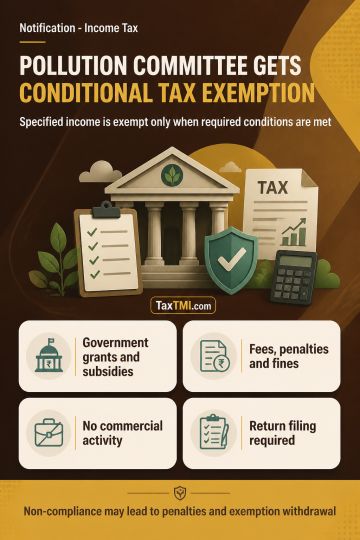
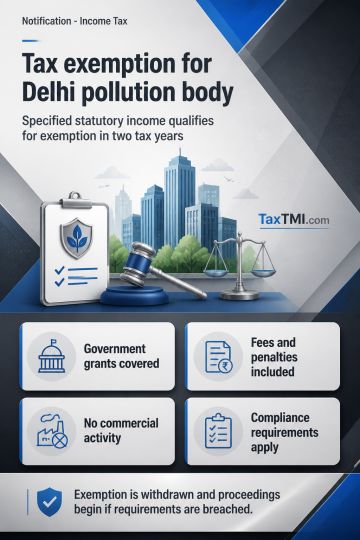
Specified income tax exemption for pollution control body remains conditional on non-commercial activity, unchanged income character, and return filin...
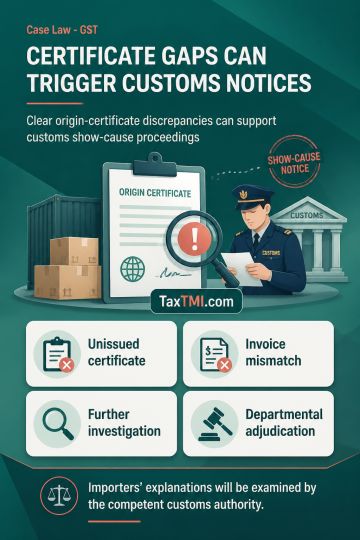
Jurisdictional facts in certificate-of-origin discrepancies can support customs show-cause proceedings, leaving factual explanations for departmental ...
The assessee's income received from Indian customers as Fee for Technical Services (FTS)/Fee for Included Services (FIS) u/s 9(1)(vii) of the Act and Article 12(4) of India-USA Double Taxation Avoidance Agreement was examined. The Assessing Officer (AO) observed that the assessee provided user-specific services involving human intervention, beyond mere content services. However, the AO's findings were self-contradictory, acknowledging the assessee as an aggregation service provider but denying its role as a mere aggregator. The AO failed to establish that the assessee provided technical services through its online platform or transferred technical knowledge, know-how, or skills to enable independent utilization by recipients. Relying on precedents, the Appellate Tribunal held that the receipts did not qualify as FIS under Article 12(4) of the India-USA tax treaty, allowing the assessee's appeals.
The assessee's income received from Indian customers as Fee for Technical Services (FTS)/Fee for Included Services (FIS) u/s 9(1)(vii) of the Act and Article 12(4) of India-USA Double Taxation Avoidance Agreement was examined. The Assessing Officer (AO) observed that the assessee provided user-specific services involving human intervention, beyond mere content services. However, the AO's findings were self-contradictory, acknowledging the assessee as an aggregation service provider but denying its role as a mere aggregator. The AO failed to establish that the assessee provided technical services through its online platform or transferred technical knowledge, know-how, or skills to enable independent utilization by recipients. Relying on precedents, the Appellate Tribunal held that the receipts did not qualify as FIS under Article 12(4) of the India-USA tax treaty, allowing the assessee's appeals.
Note: It is a system-generated summary and is for quick reference only.
 TaxTMI
 of 4794




 Join Channel


 TaxTMI