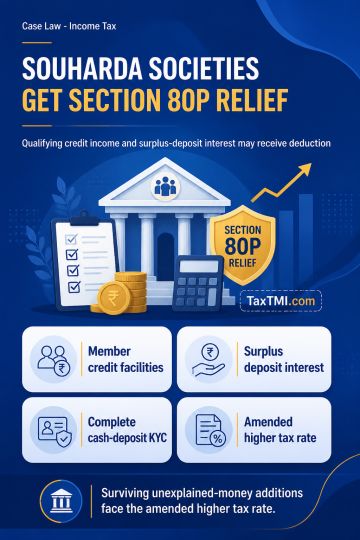
Section 80P deduction covers Souharda credit societies, including qualifying surplus-deposit interest, subject to member KYC verification for cash dep...
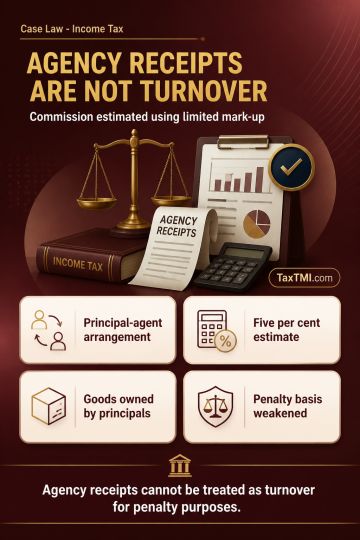
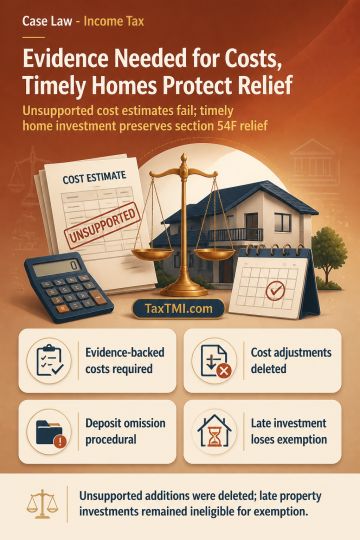
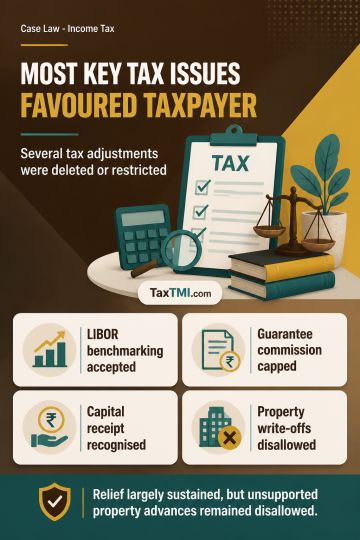
Transfer-pricing benchmarking and capital-receipt principles sustained taxpayer relief, while unsupported property-advance write-offs remained disallo...
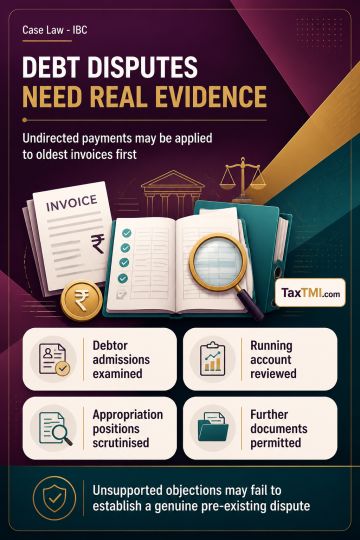
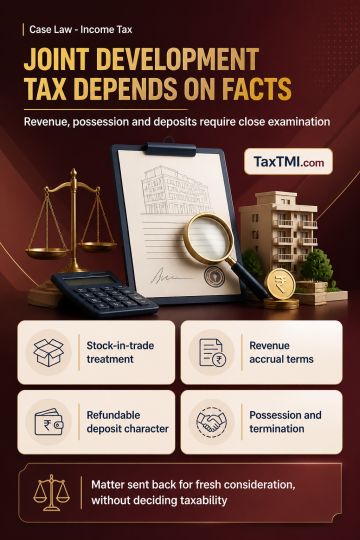
Pre-existing operational debt disputes require genuine evidence, while undirected running-account payments may be appropriated on a first-in-first-out...
Page of 4794
Press 'Enter' after typing page number.
821 to 840 of 95875 Results
❮
❯
❯❯
0 / 200
Expand Note
Add to Folder
No Folders have been created
+
Are you sure you want to delete "My most important" ?
The assessee's income received from Indian customers as Fee for Technical Services (FTS)/Fee for Included Services (FIS) u/s 9(1)(vii) of the Act and Article 12(4) of India-USA Double Taxation Avoidance Agreement was examined. The Assessing Officer (AO) observed that the assessee provided user-specific services involving human intervention, beyond mere content services. However, the AO's findings were self-contradictory, acknowledging the assessee as an aggregation service provider but denying its role as a mere aggregator. The AO failed to establish that the assessee provided technical services through its online platform or transferred technical knowledge, know-how, or skills to enable independent utilization by recipients. Relying on precedents, the Appellate Tribunal held that the receipts did not qualify as FIS under Article 12(4) of the India-USA tax treaty, allowing the assessee's appeals.
The assessee's income received from Indian customers as Fee for Technical Services (FTS)/Fee for Included Services (FIS) u/s 9(1)(vii) of the Act and Article 12(4) of India-USA Double Taxation Avoidance Agreement was examined. The Assessing Officer (AO) observed that the assessee provided user-specific services involving human intervention, beyond mere content services. However, the AO's findings were self-contradictory, acknowledging the assessee as an aggregation service provider but denying its role as a mere aggregator. The AO failed to establish that the assessee provided technical services through its online platform or transferred technical knowledge, know-how, or skills to enable independent utilization by recipients. Relying on precedents, the Appellate Tribunal held that the receipts did not qualify as FIS under Article 12(4) of the India-USA tax treaty, allowing the assessee's appeals.
Note: It is a system-generated summary and is for quick reference only.
 TaxTMI
 of 4794






 Join Channel


 TaxTMI