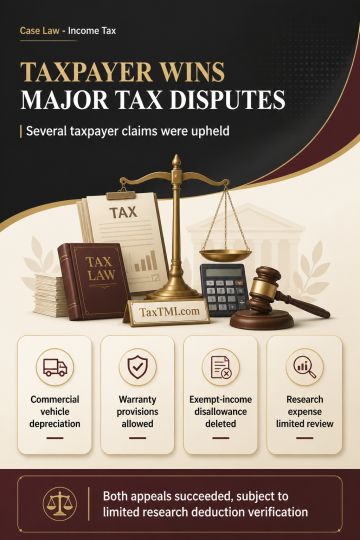
Commercial vehicle depreciation, scientifically determined warranty provisions and exempt-income disallowances were resolved in favour of the taxpayer...
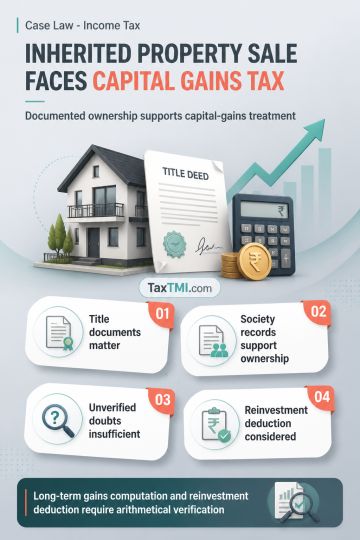
Inherited property sale proceeds require capital-gains treatment where ownership is supported by evidence, not suspicion or unverified signature doubt...
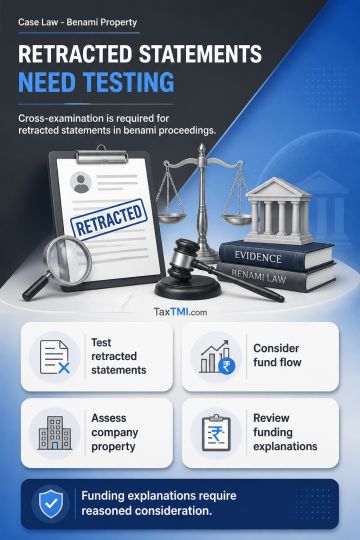
Cross-examination of retracted statements is essential where foundational evidence supports a benami allegation and documented funding explanations re...
Capital-goods exemption covers plant-modernisation accessories, while the import restriction applies only to earlier capital-goods components and spar...
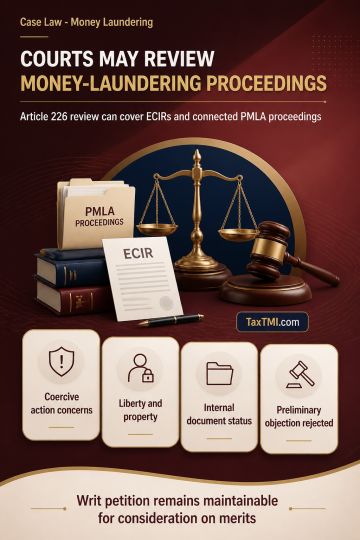
Constitutional judicial review permits challenges to ECIRs and connected money-laundering proceedings where coercive action affects fundamental intere...
The Appellate Tribunal examined the issue of invoking revisional jurisdiction u/s 263 in a case involving receipts of accommodation entries and reopening of assessment. The crux was the distinction between 'lack of inquiry' and 'inadequate inquiry' by the Assessing Officer (AO). It was held that if the AO conducted any inquiry, even if inadequate, it would not justify the Commissioner's intervention u/s 263 merely due to a different opinion. Lack of inquiry is the sole ground for exercising revisional powers. In the present case, the AO made detailed inquiries on the accommodation entry issue, which the assessee denied, and no further evidence was provided. Hence, it could not be treated as a lack of inquiry. The AO had applied their mind and accepted the assessee's explanation after reopening the case. Consequently, the Principal Commissioner was not justified in invoking revisional jurisdiction u/s 263, and the decision favored the assessee.
The Appellate Tribunal examined the issue of invoking revisional jurisdiction u/s 263 in a case involving receipts of accommodation entries and reopening of assessment. The crux was the distinction between 'lack of inquiry' and 'inadequate inquiry' by the Assessing Officer (AO). It was held that if the AO conducted any inquiry, even if inadequate, it would not justify the Commissioner's intervention u/s 263 merely due to a different opinion. Lack of inquiry is the sole ground for exercising revisional powers. In the present case, the AO made detailed inquiries on the accommodation entry issue, which the assessee denied, and no further evidence was provided. Hence, it could not be treated as a lack of inquiry. The AO had applied their mind and accepted the assessee's explanation after reopening the case. Consequently, the Principal Commissioner was not justified in invoking revisional jurisdiction u/s 263, and the decision favored the assessee.
Note: It is a system-generated summary and is for quick reference only.
 TaxTMI
 of 4782







 Join Channel


 TaxTMI
