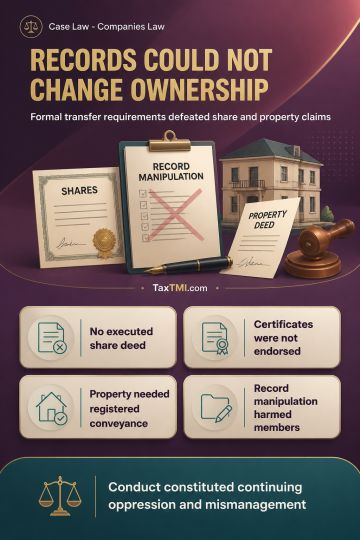
Statutory transfer formalities invalidated alleged share and property transfers, while retrospective record manipulation constituted oppression and mi...
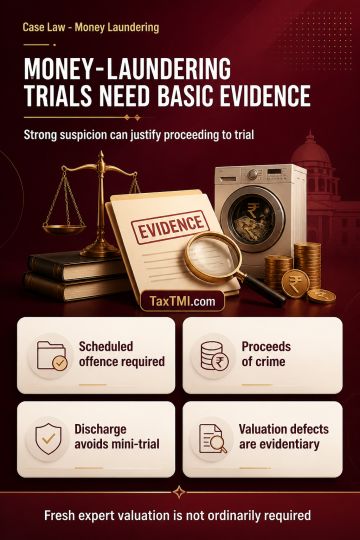
Provisional attachment of laundered funds and equivalent-value property sustained, with statutory protection limited to pension, gratuity and providen...
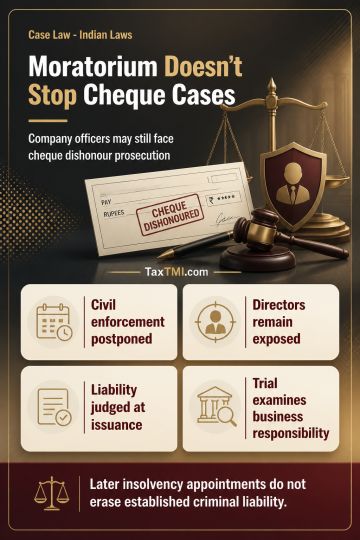
Insolvency moratorium does not shield company officers from cheque dishonour prosecution for liability arising before corporate insolvency proceedings...
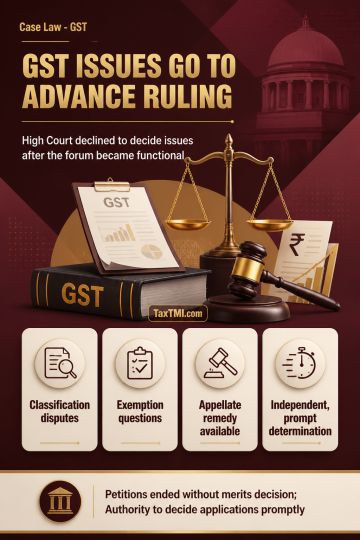
Advance-ruling mechanism governs pending GST classification, exemption and taxability disputes, limiting writ review once the specialised forum functi...
Page of 4788
Press 'Enter' after typing page number.
581 to 600 of 95752 Results
❮
❯
❯❯
0 / 200
Expand Note
Add to Folder
No Folders have been created
+
Are you sure you want to delete "My most important" ?
The Appellate Tribunal examined the issue of invoking revisional jurisdiction u/s 263 in a case involving receipts of accommodation entries and reopening of assessment. The crux was the distinction between 'lack of inquiry' and 'inadequate inquiry' by the Assessing Officer (AO). It was held that if the AO conducted any inquiry, even if inadequate, it would not justify the Commissioner's intervention u/s 263 merely due to a different opinion. Lack of inquiry is the sole ground for exercising revisional powers. In the present case, the AO made detailed inquiries on the accommodation entry issue, which the assessee denied, and no further evidence was provided. Hence, it could not be treated as a lack of inquiry. The AO had applied their mind and accepted the assessee's explanation after reopening the case. Consequently, the Principal Commissioner was not justified in invoking revisional jurisdiction u/s 263, and the decision favored the assessee.
The Appellate Tribunal examined the issue of invoking revisional jurisdiction u/s 263 in a case involving receipts of accommodation entries and reopening of assessment. The crux was the distinction between 'lack of inquiry' and 'inadequate inquiry' by the Assessing Officer (AO). It was held that if the AO conducted any inquiry, even if inadequate, it would not justify the Commissioner's intervention u/s 263 merely due to a different opinion. Lack of inquiry is the sole ground for exercising revisional powers. In the present case, the AO made detailed inquiries on the accommodation entry issue, which the assessee denied, and no further evidence was provided. Hence, it could not be treated as a lack of inquiry. The AO had applied their mind and accepted the assessee's explanation after reopening the case. Consequently, the Principal Commissioner was not justified in invoking revisional jurisdiction u/s 263, and the decision favored the assessee.
Note: It is a system-generated summary and is for quick reference only.
 TaxTMI
 of 4788








 Join Channel


 TaxTMI