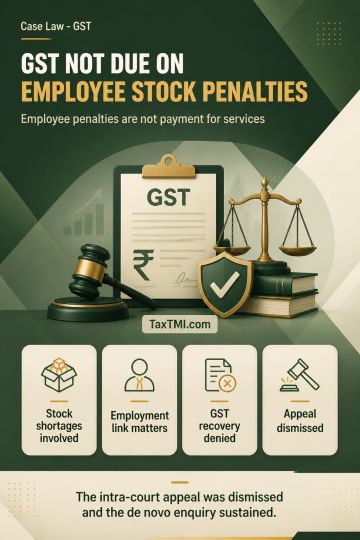
Employee stock-shortage penalties do not constitute consideration for services, preventing GST collection under Schedule II in employment relationship...
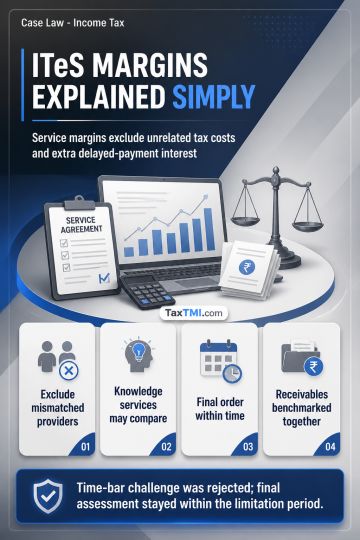
Transfer-pricing treatment of ITeS margins excludes pass-through tax recoveries and separate delayed-receivables interest after working-capital adjust...
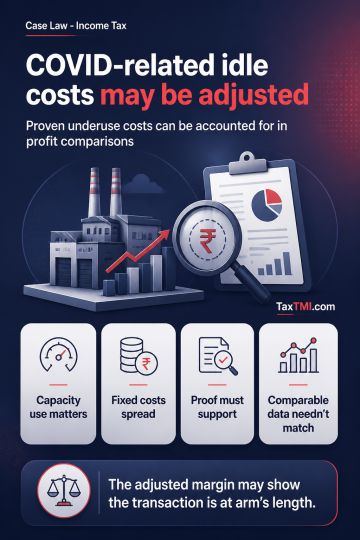
Capacity-utilisation adjustments under TNMM can neutralise substantiated COVID-related idle costs where underutilisation materially affects profitabil...
Page of 4830
Press 'Enter' after typing page number.
181 to 200 of 96587 Results
❮
❯
❯❯
0 / 200
Expand Note
Add to Folder
No Folders have been created
+
Are you sure you want to delete "My most important" ?
The appellant's customs broker (CB) license revocation, penalty imposition, and security deposit forfeiture were challenged for alleged violations of Regulations 10(a), 10(b), 10(d), 10(e), 10(m), and 10(n) of the Customs Brokers Licensing Regulations (CBLR), 2018. The key points are: The CB declared proper goods description and value in the Bills of Entry (B/Es) based on documents provided by the importer. The CB satisfactorily responded to customs queries, and goods were assessed for duty. No evidence showed the CB knowingly misdeclared goods description or value. Laxmi Narayan Mishra fabricated invoices with incorrect descriptions, not the CB. The CB accepted documents indirectly from the importer through a logistics provider, violating Regulation 10(a) by not exercising due diligence. However, other regulations were not violated. Penalty imposition for Regulation 10(a) violation is justified, but license revocation and security deposit forfeiture are not warranted based on the facts. The appeal against the Principal Commissioner's order was allowed by the CESTAT (Appellate Tribunal).
The appellant's customs broker (CB) license revocation, penalty imposition, and security deposit forfeiture were challenged for alleged violations of Regulations 10(a), 10(b), 10(d), 10(e), 10(m), and 10(n) of the Customs Brokers Licensing Regulations (CBLR), 2018. The key points are: The CB declared proper goods description and value in the Bills of Entry (B/Es) based on documents provided by the importer. The CB satisfactorily responded to customs queries, and goods were assessed for duty. No evidence showed the CB knowingly misdeclared goods description or value. Laxmi Narayan Mishra fabricated invoices with incorrect descriptions, not the CB. The CB accepted documents indirectly from the importer through a logistics provider, violating Regulation 10(a) by not exercising due diligence. However, other regulations were not violated. Penalty imposition for Regulation 10(a) violation is justified, but license revocation and security deposit forfeiture are not warranted based on the facts. The appeal against the Principal Commissioner's order was allowed by the CESTAT (Appellate Tribunal).
Note: It is a system-generated summary and is for quick reference only.
 TaxTMI
  TaxTMI
 of 4830



 Join Channel


