Bona fide disclosure requirements govern under-reporting penalties, and post-penalty immunity applications cannot secure available statutory protectio...
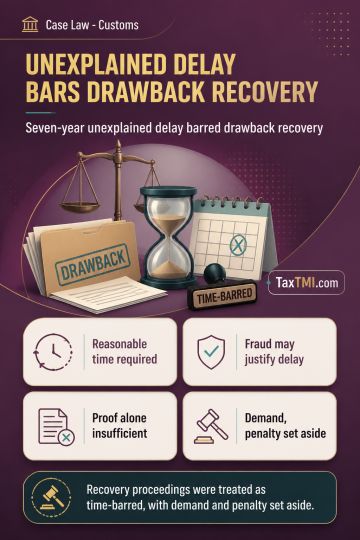
Certificate-of-origin verification procedure governs preferential customs benefits; denial without retroactive verification was set aside with consequ...
Disciplinary Committee jurisdiction and mandatory investigation requirements invalidated cancellation of an insolvency professional's registration and...
Retention of seized property survives where recorded reasons support proceeds of crime, while stayed investigation periods are excluded from limitatio...
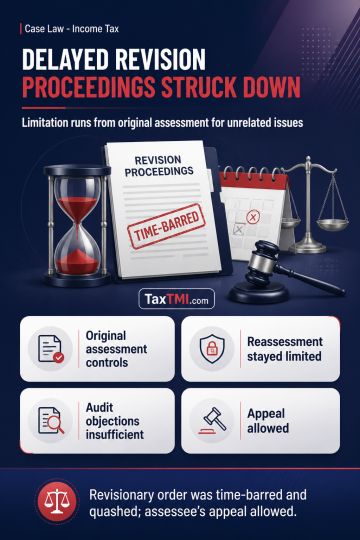
The assessment order passed u/s 153C was erroneous and prejudicial to the Revenue's interest. The Assessing Officer initiated penalty proceedings u/s 271AAC instead of Section 271(1)(c). The order lacked recording of satisfaction that the assessee concealed income or furnished inaccurate particulars. Without such satisfaction recorded, the Principal Commissioner's revision u/s 263 is untenable, as per the Madras High Court's decision in Chennai Metro Rail Ltd. The authorities can levy penalty u/s 271(1) during assessment proceedings, but the revisionary power u/s 263 cannot be exercised to direct penalty initiation, creating uncertainty. The Tribunal relied on the Madras High Court's decisions in Chennai Metro Rail Ltd. and C.R.K. Swamy, setting aside the impugned revision order due to the absence of a finding on concealment or inaccurate particulars. The assessee's appeal was allowed.
The assessment order passed u/s 153C was erroneous and prejudicial to the Revenue's interest. The Assessing Officer initiated penalty proceedings u/s 271AAC instead of Section 271(1)(c). The order lacked recording of satisfaction that the assessee concealed income or furnished inaccurate particulars. Without such satisfaction recorded, the Principal Commissioner's revision u/s 263 is untenable, as per the Madras High Court's decision in Chennai Metro Rail Ltd. The authorities can levy penalty u/s 271(1) during assessment proceedings, but the revisionary power u/s 263 cannot be exercised to direct penalty initiation, creating uncertainty. The Tribunal relied on the Madras High Court's decisions in Chennai Metro Rail Ltd. and C.R.K. Swamy, setting aside the impugned revision order due to the absence of a finding on concealment or inaccurate particulars. The assessee's appeal was allowed.
Note: It is a system-generated summary and is for quick reference only.
 TaxTMI
 of 4796

















 Join Channel


 TaxTMI

