Commercial vehicle depreciation, scientifically determined warranty provisions and exempt-income disallowances were resolved in favour of the taxpayer...
Inherited property sale proceeds require capital-gains treatment where ownership is supported by evidence, not suspicion or unverified signature doubt...
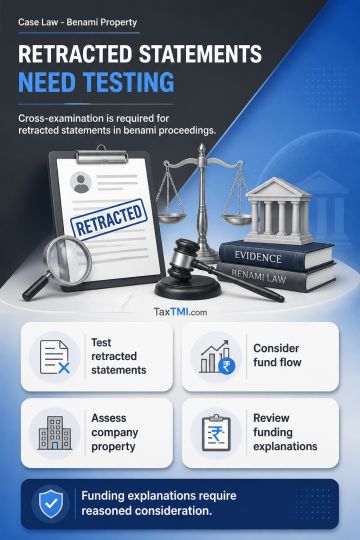
Cross-examination of retracted statements is essential where foundational evidence supports a benami allegation and documented funding explanations re...
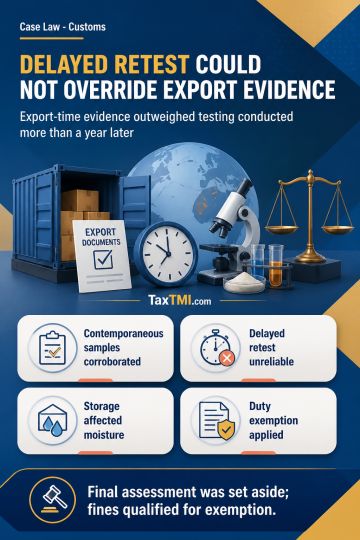
Capital-goods exemption covers plant-modernisation accessories, while the import restriction applies only to earlier capital-goods components and spar...
Constitutional judicial review permits challenges to ECIRs and connected money-laundering proceedings where coercive action affects fundamental intere...
The assessment order passed u/s 153C was erroneous and prejudicial to the Revenue's interest. The Assessing Officer initiated penalty proceedings u/s 271AAC instead of Section 271(1)(c). The order lacked recording of satisfaction that the assessee concealed income or furnished inaccurate particulars. Without such satisfaction recorded, the Principal Commissioner's revision u/s 263 is untenable, as per the Madras High Court's decision in Chennai Metro Rail Ltd. The authorities can levy penalty u/s 271(1) during assessment proceedings, but the revisionary power u/s 263 cannot be exercised to direct penalty initiation, creating uncertainty. The Tribunal relied on the Madras High Court's decisions in Chennai Metro Rail Ltd. and C.R.K. Swamy, setting aside the impugned revision order due to the absence of a finding on concealment or inaccurate particulars. The assessee's appeal was allowed.
The assessment order passed u/s 153C was erroneous and prejudicial to the Revenue's interest. The Assessing Officer initiated penalty proceedings u/s 271AAC instead of Section 271(1)(c). The order lacked recording of satisfaction that the assessee concealed income or furnished inaccurate particulars. Without such satisfaction recorded, the Principal Commissioner's revision u/s 263 is untenable, as per the Madras High Court's decision in Chennai Metro Rail Ltd. The authorities can levy penalty u/s 271(1) during assessment proceedings, but the revisionary power u/s 263 cannot be exercised to direct penalty initiation, creating uncertainty. The Tribunal relied on the Madras High Court's decisions in Chennai Metro Rail Ltd. and C.R.K. Swamy, setting aside the impugned revision order due to the absence of a finding on concealment or inaccurate particulars. The assessee's appeal was allowed.
Note: It is a system-generated summary and is for quick reference only.
 TaxTMI
 of 4782





















 Join Channel


 TaxTMI
