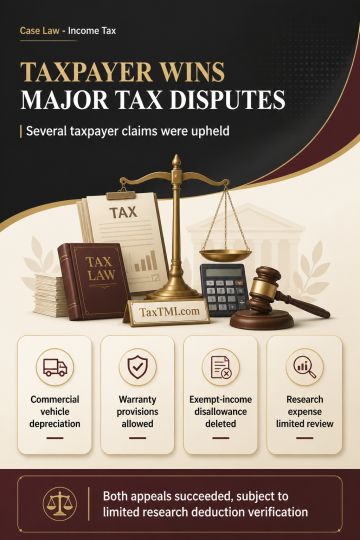
Commercial vehicle depreciation, scientifically determined warranty provisions and exempt-income disallowances were resolved in favour of the taxpayer...
Inherited property sale proceeds require capital-gains treatment where ownership is supported by evidence, not suspicion or unverified signature doubt...
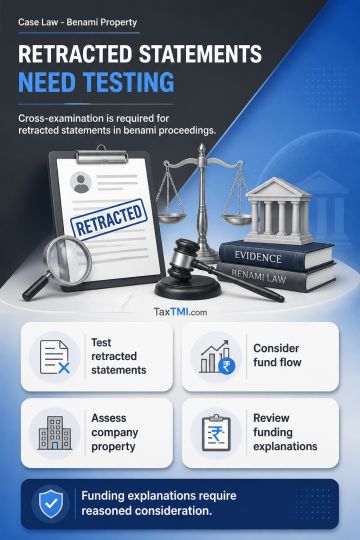
Cross-examination of retracted statements is essential where foundational evidence supports a benami allegation and documented funding explanations re...
Capital-goods exemption covers plant-modernisation accessories, while the import restriction applies only to earlier capital-goods components and spar...
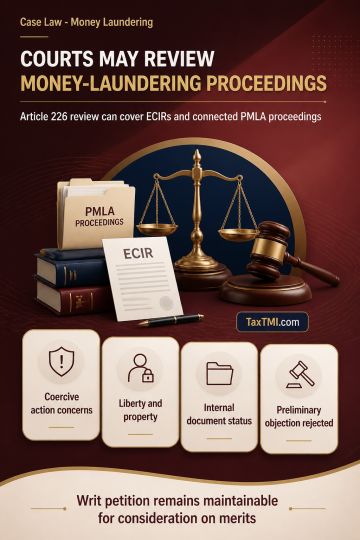
Constitutional judicial review permits challenges to ECIRs and connected money-laundering proceedings where coercive action affects fundamental intere...
In the present case, the Assessing Officer (AO) disallowed the expenditure claimed u/s 57(iii) of the Income Tax Act on an ad-hoc basis. The AO did not challenge the genuineness of the expenditure and acknowledged the submission of bills and vouchers. Section 57(iii) allows deduction of any expenditure incurred wholly and exclusively for earning income, provided it is not a capital expenditure. The AO did not contend that the expenditure was capital in nature. The assessee earned income from dispensing medicines, and the expenditure was incurred in relation to this income-earning activity. The AO did not doubt that the expenditure was not incurred for earning income. Relying on the Petroleum Sports Promotion Board case, the Appellate Tribunal held that the AO lacked jurisdiction to make an ad-hoc disallowance of 50% of the expenditure without pointing out any defect in the bills, vouchers, or ledgers. Consequently, the Tribunal directed the AO to delete the addition made, allowing the assessee's ground.
In the present case, the Assessing Officer (AO) disallowed the expenditure claimed u/s 57(iii) of the Income Tax Act on an ad-hoc basis. The AO did not challenge the genuineness of the expenditure and acknowledged the submission of bills and vouchers. Section 57(iii) allows deduction of any expenditure incurred wholly and exclusively for earning income, provided it is not a capital expenditure. The AO did not contend that the expenditure was capital in nature. The assessee earned income from dispensing medicines, and the expenditure was incurred in relation to this income-earning activity. The AO did not doubt that the expenditure was not incurred for earning income. Relying on the Petroleum Sports Promotion Board case, the Appellate Tribunal held that the AO lacked jurisdiction to make an ad-hoc disallowance of 50% of the expenditure without pointing out any defect in the bills, vouchers, or ledgers. Consequently, the Tribunal directed the AO to delete the addition made, allowing the assessee's ground.
Note: It is a system-generated summary and is for quick reference only.
 TaxTMI
 of 4782














 Join Channel


 TaxTMI
