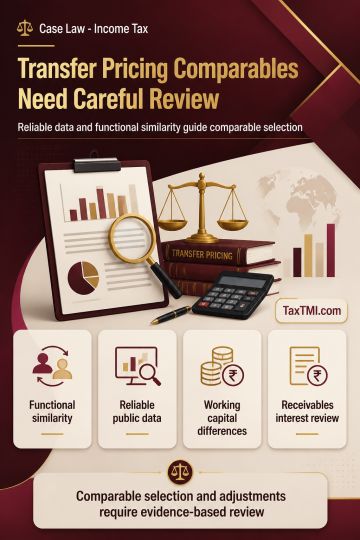
Transfer pricing comparability requires functional alignment, reliable financial data, and careful review of working capital and receivables adjustmen...
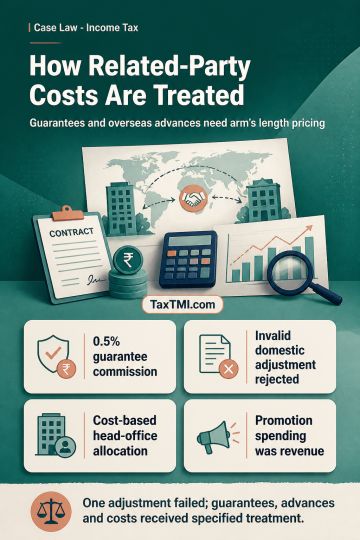
Transfer pricing rules require benchmarking corporate guarantees and associated-enterprise advances, while invalid domestic-transaction adjustments ca...
Prospective sugar export prohibition required registered letters of credit; private contracts and export quotas created no enforceable continuation ri...
Retroactive interim-moratorium exclusion permits protective asset disclosure and preservation measures against personal guarantors pending arbitration...
In the present case, the Assessing Officer (AO) disallowed the expenditure claimed u/s 57(iii) of the Income Tax Act on an ad-hoc basis. The AO did not challenge the genuineness of the expenditure and acknowledged the submission of bills and vouchers. Section 57(iii) allows deduction of any expenditure incurred wholly and exclusively for earning income, provided it is not a capital expenditure. The AO did not contend that the expenditure was capital in nature. The assessee earned income from dispensing medicines, and the expenditure was incurred in relation to this income-earning activity. The AO did not doubt that the expenditure was not incurred for earning income. Relying on the Petroleum Sports Promotion Board case, the Appellate Tribunal held that the AO lacked jurisdiction to make an ad-hoc disallowance of 50% of the expenditure without pointing out any defect in the bills, vouchers, or ledgers. Consequently, the Tribunal directed the AO to delete the addition made, allowing the assessee's ground.
In the present case, the Assessing Officer (AO) disallowed the expenditure claimed u/s 57(iii) of the Income Tax Act on an ad-hoc basis. The AO did not challenge the genuineness of the expenditure and acknowledged the submission of bills and vouchers. Section 57(iii) allows deduction of any expenditure incurred wholly and exclusively for earning income, provided it is not a capital expenditure. The AO did not contend that the expenditure was capital in nature. The assessee earned income from dispensing medicines, and the expenditure was incurred in relation to this income-earning activity. The AO did not doubt that the expenditure was not incurred for earning income. Relying on the Petroleum Sports Promotion Board case, the Appellate Tribunal held that the AO lacked jurisdiction to make an ad-hoc disallowance of 50% of the expenditure without pointing out any defect in the bills, vouchers, or ledgers. Consequently, the Tribunal directed the AO to delete the addition made, allowing the assessee's ground.
Note: It is a system-generated summary and is for quick reference only.
 TaxTMI
 of 4784













 Join Channel


 TaxTMI