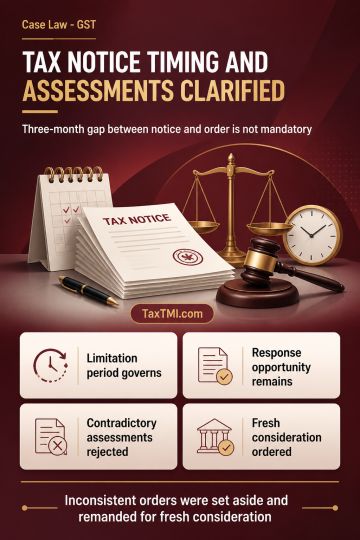
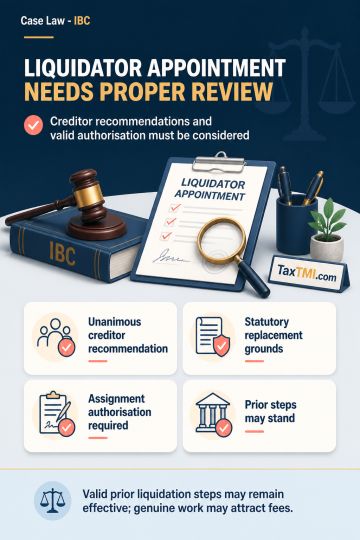
Liquidator appointment under Section 34 requires consideration of creditor recommendations, valid professional authorisation, and preservation of vali...
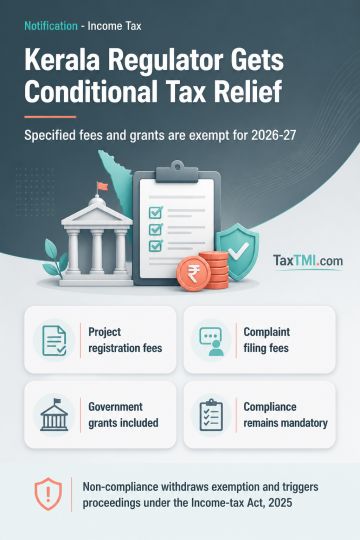
Income-tax exemption for specified regulatory fees and government grants applies subject to non-commercial activity and continuing compliance conditio...
Digital accessibility audit and remediation deadlines extended, while all other disability-compliance obligations for regulated entities remain unchan...
The court examined the invocation of the extraordinary remedy under Article 226 of the Constitution of India concerning the seizure of goods and the adjudication order. The foundational aspect of "reason to believe" for seizure and initiation of proceedings was found to be absent. The seizure was based on the belief of illegal import, while the adjudication proceeded on the allegation of illegal export, leading to a clear lack of jurisdiction. The denial of cross-examination of the seizing officer violated the principles of natural justice. These factors justified invoking the extraordinary remedy under Article 226. Consequently, the High Court allowed the writ petition and set aside the impugned order.
The court examined the invocation of the extraordinary remedy under Article 226 of the Constitution of India concerning the seizure of goods and the adjudication order. The foundational aspect of "reason to believe" for seizure and initiation of proceedings was found to be absent. The seizure was based on the belief of illegal import, while the adjudication proceeded on the allegation of illegal export, leading to a clear lack of jurisdiction. The denial of cross-examination of the seizing officer violated the principles of natural justice. These factors justified invoking the extraordinary remedy under Article 226. Consequently, the High Court allowed the writ petition and set aside the impugned order.
Note: It is a system-generated summary and is for quick reference only.
 TaxTMI
 of 4782






 Join Channel


 TaxTMI