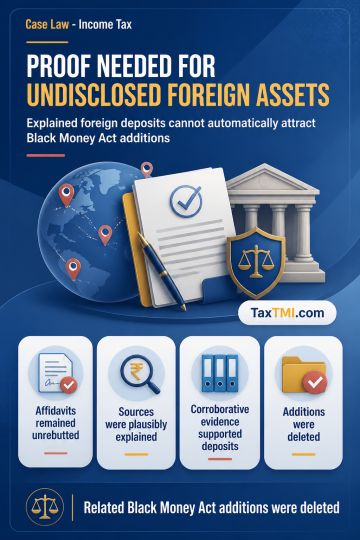
Undisclosed foreign asset classification requires an unexplained source; unrebutted affidavits and corroborative evidence defeated the Black Money Act...
Specialized Investment Fund distribution now requires dedicated certification, while transitional recognition preserves existing qualified distributor...
Page of 4792
Press 'Enter' after typing page number.
741 to 760 of 95833 Results
❮
❯
❯❯
0 / 200
Expand Note
Add to Folder
No Folders have been created
+
Are you sure you want to delete "My most important" ?
The High Court held that the delay in issuing the tax refund was subject to the strict limitation period prescribed u/s 254 read with Section 153(3). The Assessing Officer failed to adhere to the Tribunal's directions and pass a fresh assessment order within the stipulated six-month period. The statutory limitation period u/s 153(3) expired on 30.09.2021. The Legislature's intent behind Section 153(3) was strict adherence to the time limit for passing a fresh assessment order after remand. The notices for initiating fresh assessment issued beyond the prescribed period were unsustainable and had to be set aside. Relying on the Supreme Court's decision in Shelly Products, since the Department failed to comply with the Tribunal's order within the stipulated time, the income as returned by the assessee would stand accepted, and the excess tax paid for the relevant assessment year would have to be refunded.
The High Court held that the delay in issuing the tax refund was subject to the strict limitation period prescribed u/s 254 read with Section 153(3). The Assessing Officer failed to adhere to the Tribunal's directions and pass a fresh assessment order within the stipulated six-month period. The statutory limitation period u/s 153(3) expired on 30.09.2021. The Legislature's intent behind Section 153(3) was strict adherence to the time limit for passing a fresh assessment order after remand. The notices for initiating fresh assessment issued beyond the prescribed period were unsustainable and had to be set aside. Relying on the Supreme Court's decision in Shelly Products, since the Department failed to comply with the Tribunal's order within the stipulated time, the income as returned by the assessee would stand accepted, and the excess tax paid for the relevant assessment year would have to be refunded.
Note: It is a system-generated summary and is for quick reference only.
 TaxTMI
 of 4792











 Join Channel


 TaxTMI