Cooperative society deposits, member-interest TDS exemption and credit-facility deduction claims require verification through records and supporting e...
Customs jurisdiction over EPCG condition breaches survives export-obligation discharge certificates, requiring alleged fraud and misdeclaration to be ...
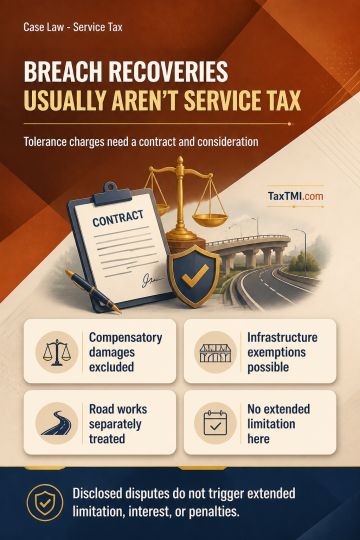
Contractual tolerance requires consideration; breach recoveries, qualifying public infrastructure services and road works escape service tax liability...
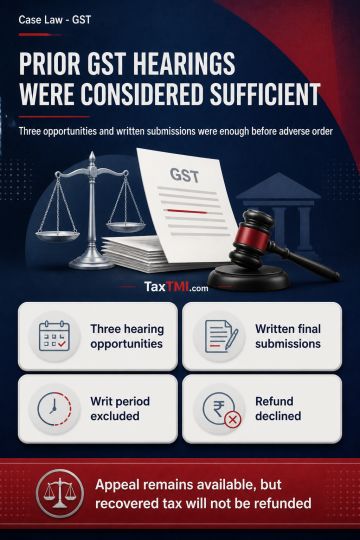
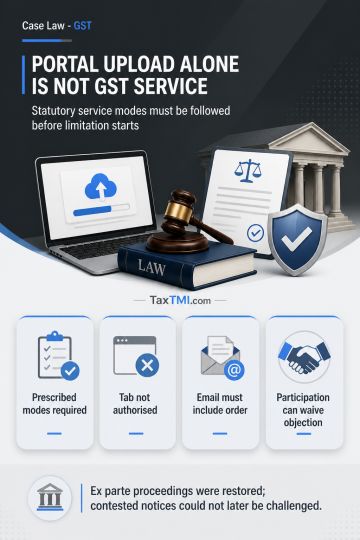
Personal hearing requirements in GST adjudication were satisfied by prior opportunities and written submissions; appellate limitation received writ-pe...
Page of 4786
Press 'Enter' after typing page number.
501 to 520 of 95714 Results
❮
❯
❯❯
0 / 200
Expand Note
Add to Folder
No Folders have been created
+
Are you sure you want to delete "My most important" ?
The High Court held that the delay in issuing the tax refund was subject to the strict limitation period prescribed u/s 254 read with Section 153(3). The Assessing Officer failed to adhere to the Tribunal's directions and pass a fresh assessment order within the stipulated six-month period. The statutory limitation period u/s 153(3) expired on 30.09.2021. The Legislature's intent behind Section 153(3) was strict adherence to the time limit for passing a fresh assessment order after remand. The notices for initiating fresh assessment issued beyond the prescribed period were unsustainable and had to be set aside. Relying on the Supreme Court's decision in Shelly Products, since the Department failed to comply with the Tribunal's order within the stipulated time, the income as returned by the assessee would stand accepted, and the excess tax paid for the relevant assessment year would have to be refunded.
The High Court held that the delay in issuing the tax refund was subject to the strict limitation period prescribed u/s 254 read with Section 153(3). The Assessing Officer failed to adhere to the Tribunal's directions and pass a fresh assessment order within the stipulated six-month period. The statutory limitation period u/s 153(3) expired on 30.09.2021. The Legislature's intent behind Section 153(3) was strict adherence to the time limit for passing a fresh assessment order after remand. The notices for initiating fresh assessment issued beyond the prescribed period were unsustainable and had to be set aside. Relying on the Supreme Court's decision in Shelly Products, since the Department failed to comply with the Tribunal's order within the stipulated time, the income as returned by the assessee would stand accepted, and the excess tax paid for the relevant assessment year would have to be refunded.
Note: It is a system-generated summary and is for quick reference only.
 TaxTMI
 of 4786










 Join Channel


 TaxTMI