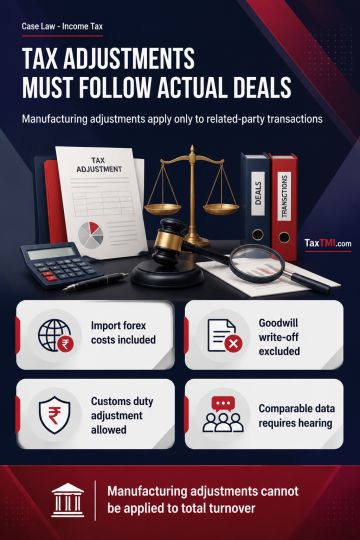
International transaction benchmarking restricts transfer pricing adjustments to associated-enterprise dealings, while functional comparability govern...
Joint development agreements defer taxable transfer where possession lacks part performance, while completed flats determine consideration and exempti...
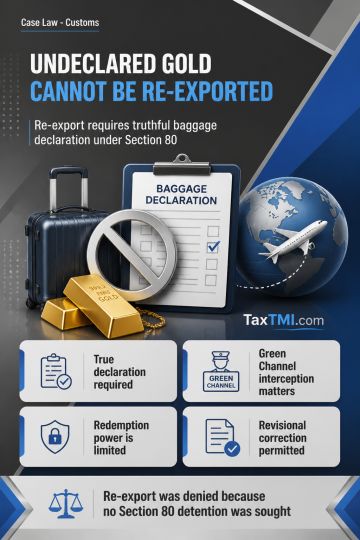
Passenger baggage re-export requires true declaration and cannot be granted indirectly through discretionary redemption of undeclared prohibited goods...
The appellant, a customs broker, was found responsible for advising the importer to follow rules and regulations governing clearance of imported goods, and any non-compliance should have been brought to the customs authorities' notice. The appellant suggested the importer mis-declare the imported goods, described as "blank guns" which could have been modified into lethal weapons, to circumvent requirements under the Foreign Trade Policy and the Arms Act, 1959 read with the Arms Rules, 2016. The appellant had knowledge of such mis-declaration and mis-classification under CTH 9503 as "Blank Firing Guns," requiring a DGFT license under the import policy and a license under the Arms Act. The factual findings led to the forfeiture of the security deposit. As the case involved only factual findings, no substantial questions of law arose, and the appeal was dismissed.
The appellant, a customs broker, was found responsible for advising the importer to follow rules and regulations governing clearance of imported goods, and any non-compliance should have been brought to the customs authorities' notice. The appellant suggested the importer mis-declare the imported goods, described as "blank guns" which could have been modified into lethal weapons, to circumvent requirements under the Foreign Trade Policy and the Arms Act, 1959 read with the Arms Rules, 2016. The appellant had knowledge of such mis-declaration and mis-classification under CTH 9503 as "Blank Firing Guns," requiring a DGFT license under the import policy and a license under the Arms Act. The factual findings led to the forfeiture of the security deposit. As the case involved only factual findings, no substantial questions of law arose, and the appeal was dismissed.
Note: It is a system-generated summary and is for quick reference only.
 TaxTMI
 of 4780















 Join Channel


 TaxTMI
