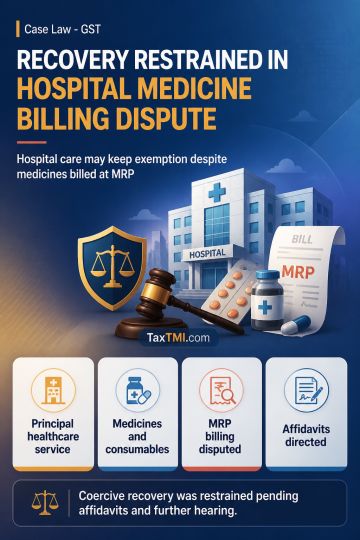
Composite inpatient healthcare supply may retain exemption despite MRP medicine billing, while separate taxable sale characterisation remains disputed...
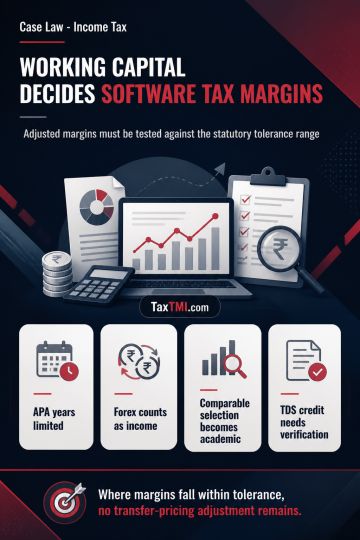
Working-capital adjustment determines whether software-services transfer-pricing margins fall within the statutory tolerance range, eliminating any ad...
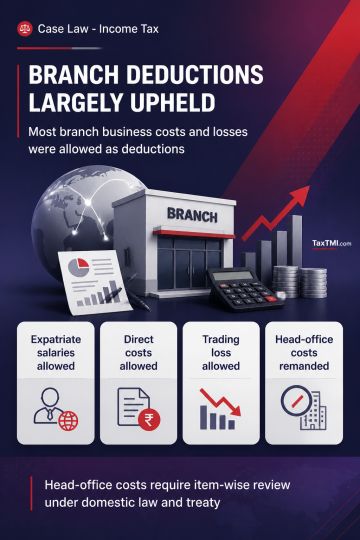
Permanent establishment deductions upheld for expatriate salaries, direct costs and trading losses, while head-office costs require fresh classificati...
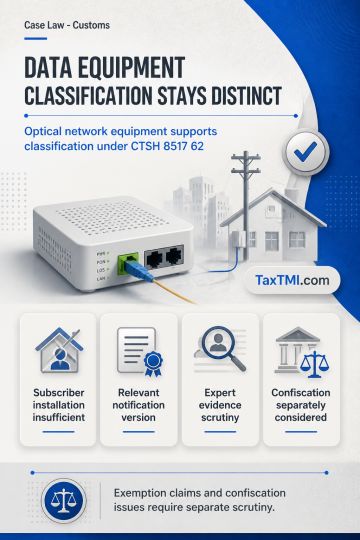
Data transmission equipment classification under CTSH 8517 62 remains distinct from residual classification, with exemption evidence requiring scrutin...
Page of 4788
Press 'Enter' after typing page number.
721 to 740 of 95749 Results
❮
❯
❯❯
0 / 200
Expand Note
Add to Folder
No Folders have been created
+
Are you sure you want to delete "My most important" ?
The appellant, a customs broker, was found responsible for advising the importer to follow rules and regulations governing clearance of imported goods, and any non-compliance should have been brought to the customs authorities' notice. The appellant suggested the importer mis-declare the imported goods, described as "blank guns" which could have been modified into lethal weapons, to circumvent requirements under the Foreign Trade Policy and the Arms Act, 1959 read with the Arms Rules, 2016. The appellant had knowledge of such mis-declaration and mis-classification under CTH 9503 as "Blank Firing Guns," requiring a DGFT license under the import policy and a license under the Arms Act. The factual findings led to the forfeiture of the security deposit. As the case involved only factual findings, no substantial questions of law arose, and the appeal was dismissed.
The appellant, a customs broker, was found responsible for advising the importer to follow rules and regulations governing clearance of imported goods, and any non-compliance should have been brought to the customs authorities' notice. The appellant suggested the importer mis-declare the imported goods, described as "blank guns" which could have been modified into lethal weapons, to circumvent requirements under the Foreign Trade Policy and the Arms Act, 1959 read with the Arms Rules, 2016. The appellant had knowledge of such mis-declaration and mis-classification under CTH 9503 as "Blank Firing Guns," requiring a DGFT license under the import policy and a license under the Arms Act. The factual findings led to the forfeiture of the security deposit. As the case involved only factual findings, no substantial questions of law arose, and the appeal was dismissed.
Note: It is a system-generated summary and is for quick reference only.
 TaxTMI
 of 4788








 Join Channel


 TaxTMI