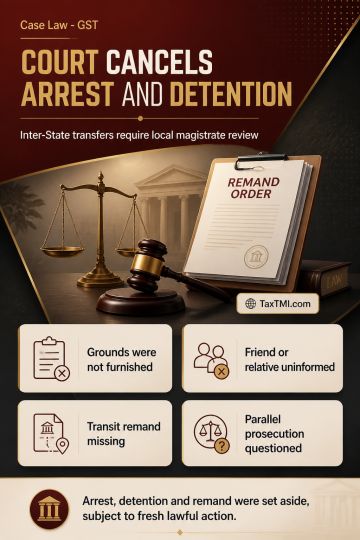
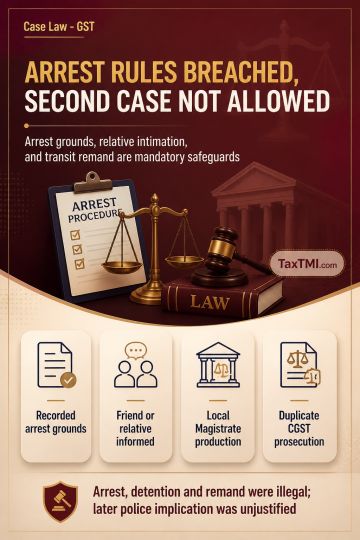
Arrest safeguards and transit remand requirements invalidated detention following inter-State transfer without communicated grounds or magistrate auth...
Arrest safeguards require disclosed grounds, relative intimation and transit remand, while duplicate prosecution under the CGST framework is unsustain...
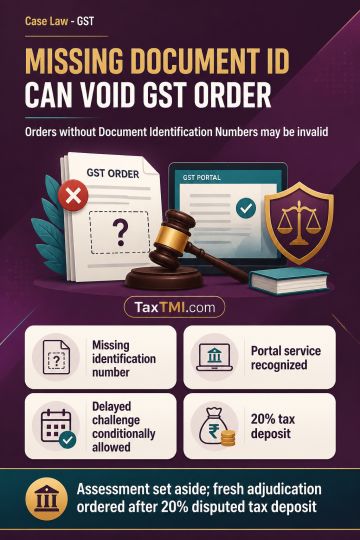
Document Identification Number defects can invalidate GST assessments, with delayed challenges entertained conditionally where patent irregularities e...
Windmill commissioning evidence supported higher depreciation where grid connection and electricity generation proved operational use before the relev...
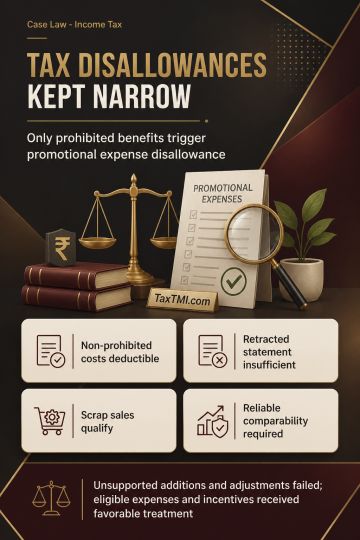
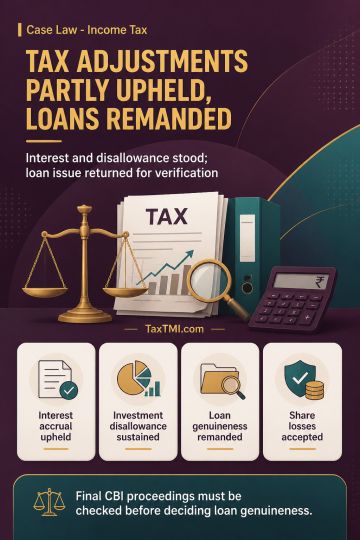
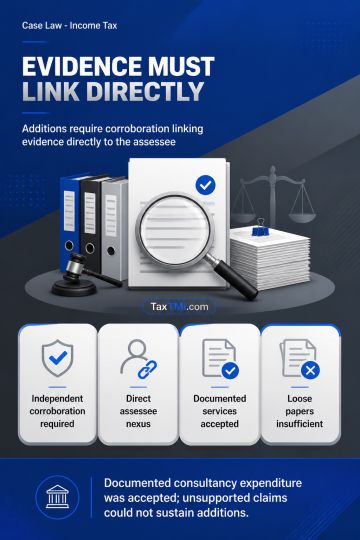
Pharmaceutical promotion and transfer-pricing comparability principles limited disallowances, while uncorroborated search allegations and unsupported ...
The appellant, a customs broker, was found responsible for advising the importer to follow rules and regulations governing clearance of imported goods, and any non-compliance should have been brought to the customs authorities' notice. The appellant suggested the importer mis-declare the imported goods, described as "blank guns" which could have been modified into lethal weapons, to circumvent requirements under the Foreign Trade Policy and the Arms Act, 1959 read with the Arms Rules, 2016. The appellant had knowledge of such mis-declaration and mis-classification under CTH 9503 as "Blank Firing Guns," requiring a DGFT license under the import policy and a license under the Arms Act. The factual findings led to the forfeiture of the security deposit. As the case involved only factual findings, no substantial questions of law arose, and the appeal was dismissed.
The appellant, a customs broker, was found responsible for advising the importer to follow rules and regulations governing clearance of imported goods, and any non-compliance should have been brought to the customs authorities' notice. The appellant suggested the importer mis-declare the imported goods, described as "blank guns" which could have been modified into lethal weapons, to circumvent requirements under the Foreign Trade Policy and the Arms Act, 1959 read with the Arms Rules, 2016. The appellant had knowledge of such mis-declaration and mis-classification under CTH 9503 as "Blank Firing Guns," requiring a DGFT license under the import policy and a license under the Arms Act. The factual findings led to the forfeiture of the security deposit. As the case involved only factual findings, no substantial questions of law arose, and the appeal was dismissed.
Note: It is a system-generated summary and is for quick reference only.
 TaxTMI
 of 4782









 Join Channel


 TaxTMI
