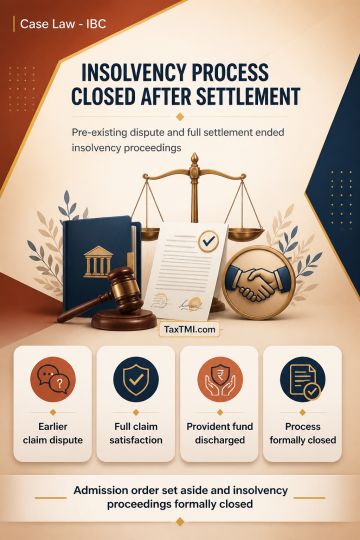
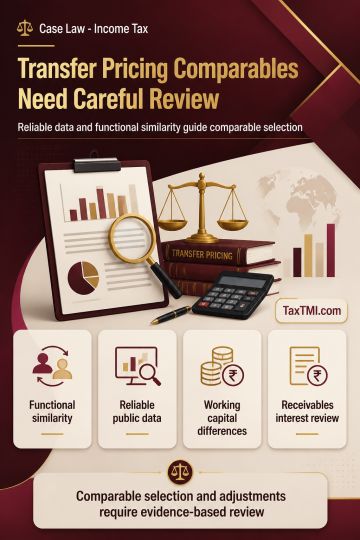
Transfer pricing comparability requires functional alignment, reliable financial data, and careful review of working capital and receivables adjustmen...
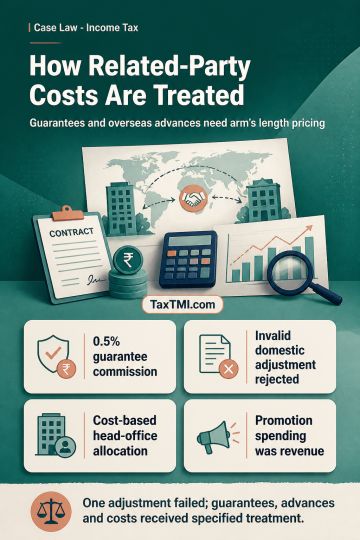
Transfer pricing rules require benchmarking corporate guarantees and associated-enterprise advances, while invalid domestic-transaction adjustments ca...
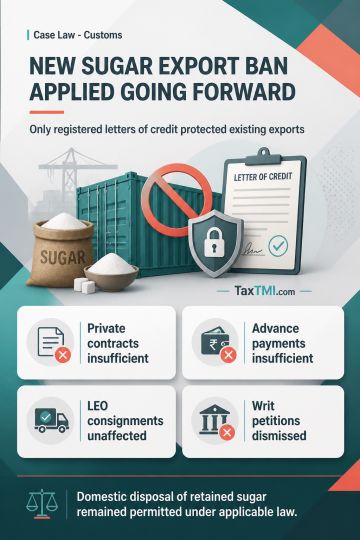
Prospective sugar export prohibition required registered letters of credit; private contracts and export quotas created no enforceable continuation ri...
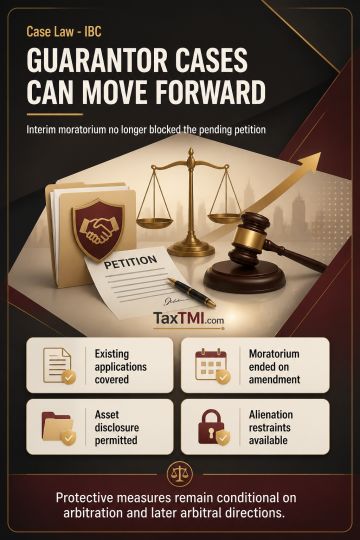
Retroactive interim-moratorium exclusion permits protective asset disclosure and preservation measures against personal guarantors pending arbitration...
The judgment addresses the jurisdiction and competence of the Appellate Authority u/s 107(4) of the Act of 2017 to condone delays in filing appeals against decisions or orders passed by an adjudicating authority beyond the prescribed time limit. The Court relied on the Supreme Court's decision in Bengal Chemists and Druggists Association v. Kalyan Chowdhury, which interpreted a similar provision in the Companies Act, 2013. It held that the Appellate Authority cannot entertain an appeal u/s 107 if it is filed beyond four months from the date of communication of the decision or order. While the High Court has extraordinary jurisdiction to condone delays in exceptional circumstances to prevent gross injustice, the reasons provided by the petitioner were found insufficient to warrant such exercise. Consequently, the writ petitions were dismissed as lacking merit.
The judgment addresses the jurisdiction and competence of the Appellate Authority u/s 107(4) of the Act of 2017 to condone delays in filing appeals against decisions or orders passed by an adjudicating authority beyond the prescribed time limit. The Court relied on the Supreme Court's decision in Bengal Chemists and Druggists Association v. Kalyan Chowdhury, which interpreted a similar provision in the Companies Act, 2013. It held that the Appellate Authority cannot entertain an appeal u/s 107 if it is filed beyond four months from the date of communication of the decision or order. While the High Court has extraordinary jurisdiction to condone delays in exceptional circumstances to prevent gross injustice, the reasons provided by the petitioner were found insufficient to warrant such exercise. Consequently, the writ petitions were dismissed as lacking merit.
Note: It is a system-generated summary and is for quick reference only.
 TaxTMI
 of 4780










 Join Channel


 TaxTMI