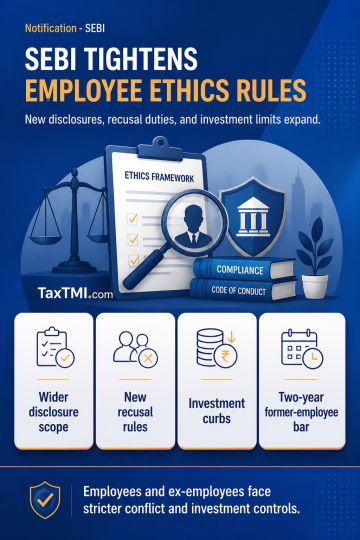
Employee conflict disclosures and investment restrictions expand with new recusal duties, post-employment limits, and compliance reporting requirement...
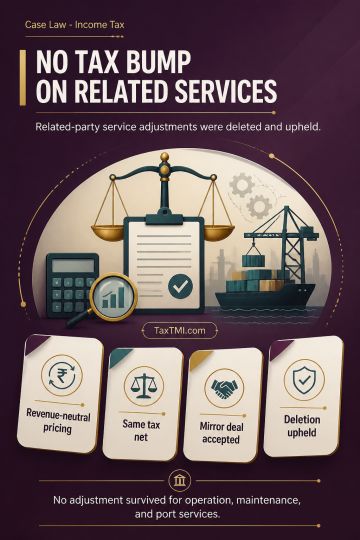
Revenue-neutral domestic transfer pricing and mirror transactions justified deletion of related-party adjustments for operation, maintenance and port ...
Page of 4792
Press 'Enter' after typing page number.
1061 to 1080 of 95833 Results
❮
❯
❯❯
0 / 200
Expand Note
Add to Folder
No Folders have been created
+
Are you sure you want to delete "My most important" ?
The judgment addresses the jurisdiction and competence of the Appellate Authority u/s 107(4) of the Act of 2017 to condone delays in filing appeals against decisions or orders passed by an adjudicating authority beyond the prescribed time limit. The Court relied on the Supreme Court's decision in Bengal Chemists and Druggists Association v. Kalyan Chowdhury, which interpreted a similar provision in the Companies Act, 2013. It held that the Appellate Authority cannot entertain an appeal u/s 107 if it is filed beyond four months from the date of communication of the decision or order. While the High Court has extraordinary jurisdiction to condone delays in exceptional circumstances to prevent gross injustice, the reasons provided by the petitioner were found insufficient to warrant such exercise. Consequently, the writ petitions were dismissed as lacking merit.
The judgment addresses the jurisdiction and competence of the Appellate Authority u/s 107(4) of the Act of 2017 to condone delays in filing appeals against decisions or orders passed by an adjudicating authority beyond the prescribed time limit. The Court relied on the Supreme Court's decision in Bengal Chemists and Druggists Association v. Kalyan Chowdhury, which interpreted a similar provision in the Companies Act, 2013. It held that the Appellate Authority cannot entertain an appeal u/s 107 if it is filed beyond four months from the date of communication of the decision or order. While the High Court has extraordinary jurisdiction to condone delays in exceptional circumstances to prevent gross injustice, the reasons provided by the petitioner were found insufficient to warrant such exercise. Consequently, the writ petitions were dismissed as lacking merit.
Note: It is a system-generated summary and is for quick reference only.
 TaxTMI
 of 4792











 Join Channel


 TaxTMI