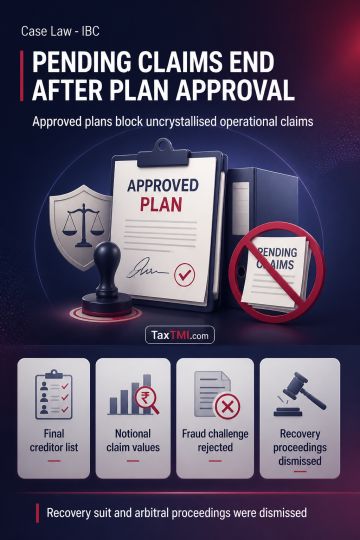
Clean slate principle extinguishes uncrystallised operational claims and bars continuation of pending recovery and arbitral proceedings after plan app...
Works contract classification governs composite layout-development contracts where VAT-paid goods are transferred alongside construction and infrastru...
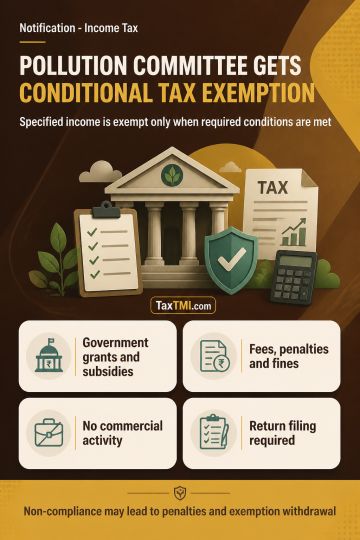
Specified income tax exemption for pollution control body remains conditional on non-commercial activity, unchanged income character, and return filin...
Jurisdictional facts in certificate-of-origin discrepancies can support customs show-cause proceedings, leaving factual explanations for departmental ...
The judgment addresses the jurisdiction and competence of the Appellate Authority u/s 107(4) of the Act of 2017 to condone delays in filing appeals against decisions or orders passed by an adjudicating authority beyond the prescribed time limit. The Court relied on the Supreme Court's decision in Bengal Chemists and Druggists Association v. Kalyan Chowdhury, which interpreted a similar provision in the Companies Act, 2013. It held that the Appellate Authority cannot entertain an appeal u/s 107 if it is filed beyond four months from the date of communication of the decision or order. While the High Court has extraordinary jurisdiction to condone delays in exceptional circumstances to prevent gross injustice, the reasons provided by the petitioner were found insufficient to warrant such exercise. Consequently, the writ petitions were dismissed as lacking merit.
The judgment addresses the jurisdiction and competence of the Appellate Authority u/s 107(4) of the Act of 2017 to condone delays in filing appeals against decisions or orders passed by an adjudicating authority beyond the prescribed time limit. The Court relied on the Supreme Court's decision in Bengal Chemists and Druggists Association v. Kalyan Chowdhury, which interpreted a similar provision in the Companies Act, 2013. It held that the Appellate Authority cannot entertain an appeal u/s 107 if it is filed beyond four months from the date of communication of the decision or order. While the High Court has extraordinary jurisdiction to condone delays in exceptional circumstances to prevent gross injustice, the reasons provided by the petitioner were found insufficient to warrant such exercise. Consequently, the writ petitions were dismissed as lacking merit.
Note: It is a system-generated summary and is for quick reference only.
 TaxTMI
 of 4792










 Join Channel


 TaxTMI