Section 80P deduction covers Souharda credit societies, including qualifying surplus-deposit interest, subject to member KYC verification for cash dep...
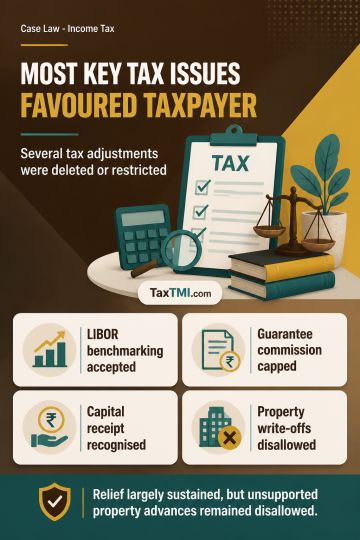
Transfer-pricing benchmarking and capital-receipt principles sustained taxpayer relief, while unsupported property-advance write-offs remained disallo...
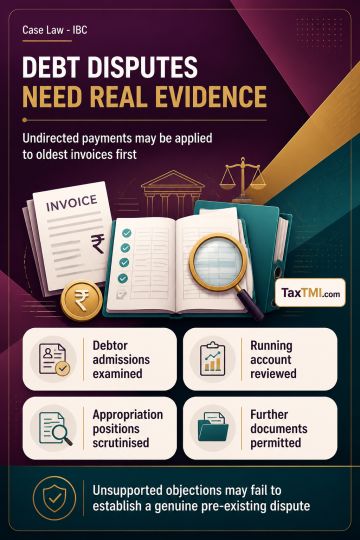
Pre-existing operational debt disputes require genuine evidence, while undirected running-account payments may be appropriated on a first-in-first-out...
Agency in CNG distribution makes outlet operators commission agents, rendering taxable Business Auxiliary Service rather than purchasing goods for res...
The judgment addresses the jurisdiction and competence of the Appellate Authority u/s 107(4) of the Act of 2017 to condone delays in filing appeals against decisions or orders passed by an adjudicating authority beyond the prescribed time limit. The Court relied on the Supreme Court's decision in Bengal Chemists and Druggists Association v. Kalyan Chowdhury, which interpreted a similar provision in the Companies Act, 2013. It held that the Appellate Authority cannot entertain an appeal u/s 107 if it is filed beyond four months from the date of communication of the decision or order. While the High Court has extraordinary jurisdiction to condone delays in exceptional circumstances to prevent gross injustice, the reasons provided by the petitioner were found insufficient to warrant such exercise. Consequently, the writ petitions were dismissed as lacking merit.
The judgment addresses the jurisdiction and competence of the Appellate Authority u/s 107(4) of the Act of 2017 to condone delays in filing appeals against decisions or orders passed by an adjudicating authority beyond the prescribed time limit. The Court relied on the Supreme Court's decision in Bengal Chemists and Druggists Association v. Kalyan Chowdhury, which interpreted a similar provision in the Companies Act, 2013. It held that the Appellate Authority cannot entertain an appeal u/s 107 if it is filed beyond four months from the date of communication of the decision or order. While the High Court has extraordinary jurisdiction to condone delays in exceptional circumstances to prevent gross injustice, the reasons provided by the petitioner were found insufficient to warrant such exercise. Consequently, the writ petitions were dismissed as lacking merit.
Note: It is a system-generated summary and is for quick reference only.
 TaxTMI
 of 4788








 Join Channel


 TaxTMI