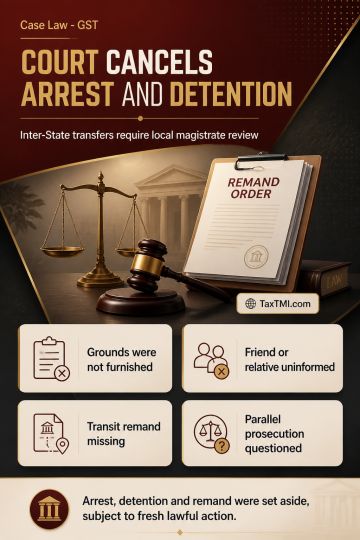
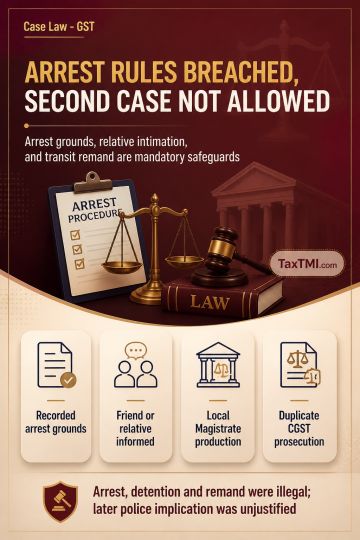
Arrest safeguards and transit remand requirements invalidated detention following inter-State transfer without communicated grounds or magistrate auth...
Arrest safeguards require disclosed grounds, relative intimation and transit remand, while duplicate prosecution under the CGST framework is unsustain...
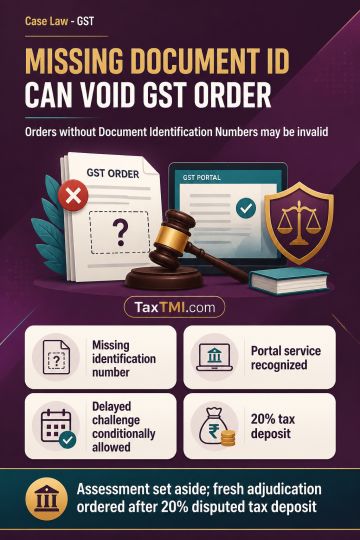
Document Identification Number defects can invalidate GST assessments, with delayed challenges entertained conditionally where patent irregularities e...
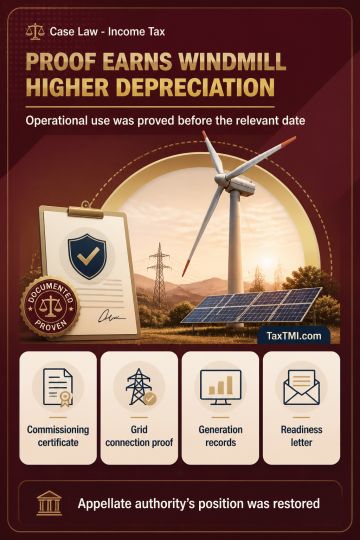
Windmill commissioning evidence supported higher depreciation where grid connection and electricity generation proved operational use before the relev...
Validity of input tax credit (ITC) u/s 16 of the UP GST Act hinges on compliance with specified conditions to avoid double taxation. The burden lies on the dealer to prove fulfillment of conditions for claiming ITC. Merely producing tax invoices, e-way bills, and banking channel payments is insufficient. Proof of actual physical movement of goods, genuineness of transportation, payment of freight charges, acknowledgment of delivery, toll receipts, and filing of GSTR 2A is necessary. The Supreme Court has held that the primary burden is on the dealer to furnish details like selling dealer, vehicle number, freight payment, delivery acknowledgment, tax invoices, and payment particulars to establish actual goods movement. Submitting only invoices, e-way bills, or payment details is inadequate. Consequently, the High Court dismissed the writ petition, upholding the orders denying ITC for non-compliance with statutory conditions.
Validity of input tax credit (ITC) u/s 16 of the UP GST Act hinges on compliance with specified conditions to avoid double taxation. The burden lies on the dealer to prove fulfillment of conditions for claiming ITC. Merely producing tax invoices, e-way bills, and banking channel payments is insufficient. Proof of actual physical movement of goods, genuineness of transportation, payment of freight charges, acknowledgment of delivery, toll receipts, and filing of GSTR 2A is necessary. The Supreme Court has held that the primary burden is on the dealer to furnish details like selling dealer, vehicle number, freight payment, delivery acknowledgment, tax invoices, and payment particulars to establish actual goods movement. Submitting only invoices, e-way bills, or payment details is inadequate. Consequently, the High Court dismissed the writ petition, upholding the orders denying ITC for non-compliance with statutory conditions.
Note: It is a system-generated summary and is for quick reference only.
 TaxTMI
 of 4805






 Join Channel


 TaxTMI
