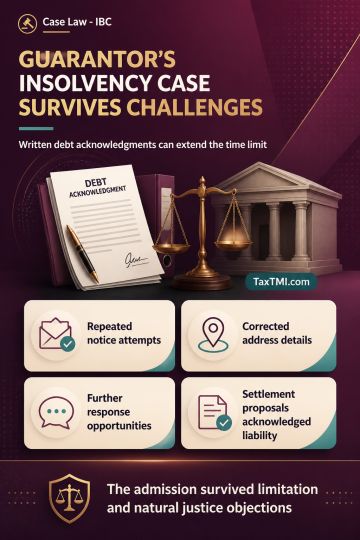
Service of notice and contractual debt acknowledgment preserved insolvency admission against a corporate guarantor despite limitation and natural just...
Original works exemption excludes standalone boulder transportation, leaving subcontracted railway-project transport services subject to service tax l...
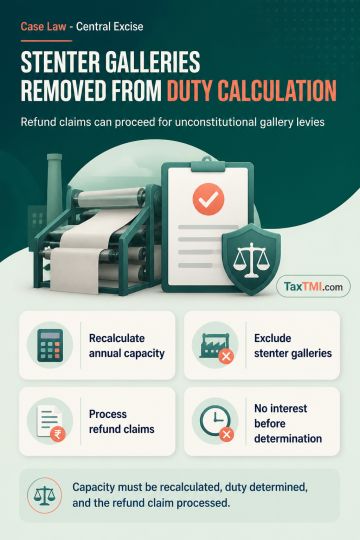
Annual production capacity determinations excluding stenter galleries support refunds for unconstitutional excise levies without an unjust-enrichment ...
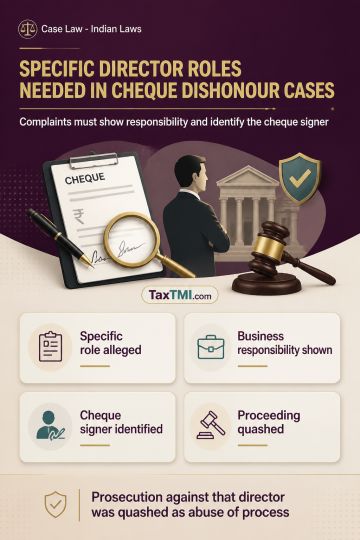
Vicarious liability for cheque dishonour requires specific allegations of responsibility and cheque signatory; generic director allegations cannot sus...
IT Resilience Index requires market infrastructure institutions to automate resilience scoring, early warnings, and continuous service-delivery monito...
The Income Tax Appellate Tribunal examined the revisionary powers u/s 263 regarding the allowability of deduction claimed u/s 36(1)(iii). The Assessing Officer (AO) called for information on interest expenses, loans, advances, and the accounting method followed. The Tribunal held that the AO applied their mind, verified the facts, and considered one of the possible views based on the information provided. Mere non-discussion of a query responded to by the assessee in the assessment order does not imply non-application of mind. The Tribunal concluded that the Principal Commissioner's order did not satisfy the twin conditions of being erroneous and prejudicial to revenue interests. Consequently, the Tribunal set aside the Principal Commissioner's order and allowed the assessee's appeal.
The Income Tax Appellate Tribunal examined the revisionary powers u/s 263 regarding the allowability of deduction claimed u/s 36(1)(iii). The Assessing Officer (AO) called for information on interest expenses, loans, advances, and the accounting method followed. The Tribunal held that the AO applied their mind, verified the facts, and considered one of the possible views based on the information provided. Mere non-discussion of a query responded to by the assessee in the assessment order does not imply non-application of mind. The Tribunal concluded that the Principal Commissioner's order did not satisfy the twin conditions of being erroneous and prejudicial to revenue interests. Consequently, the Tribunal set aside the Principal Commissioner's order and allowed the assessee's appeal.
Note: It is a system-generated summary and is for quick reference only.
 TaxTMI
  TaxTMI
 of 4828














 Join Channel