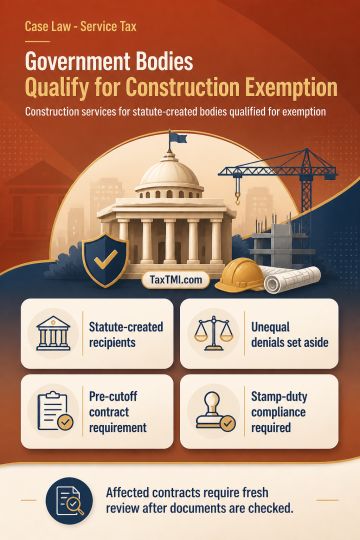
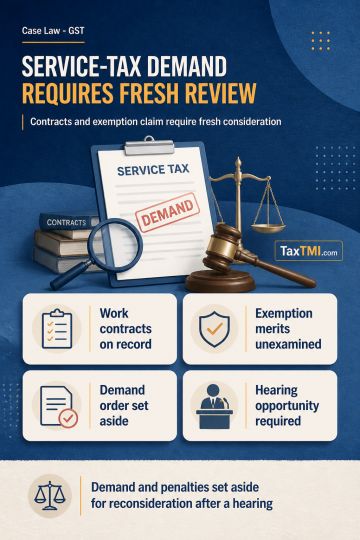
Governmental authority status supports construction-service exemption, while pre-cutoff contract and stamp-duty compliance requires verification on re...
Automated Free Sale and Commerce Certificates enable paperless processing while retaining risk-based manual verification for selected exporter applica...
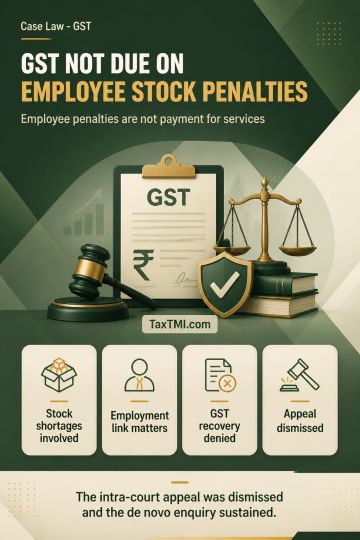
Employee stock-shortage penalties do not constitute consideration for services, preventing GST collection under Schedule II in employment relationship...
The case pertains to revision u/s 263 regarding adjustment made in profit on account of tangible fixed assets. The assessee's audited financial statements indicated an increase in profit as per ICDS-V (tangible fixed assets). However, the Assessing Officer (AO) failed to add back the impugned amount despite the auditors' recommendation. The Commissioner of Income Tax (CIT) provisionally computed excess depreciation granted at 15%. The Appellate Tribunal held that the accounts' working of depreciation chargeable under the profit and loss account was correctly worked out and disclosed in the audit report filed with the return of income. The AO considered the assessee's explanation and dropped any adverse treatment. The CIT erroneously failed to consider the details in the audit report, leading to an erroneous conclusion. The order was quashed, and the decision was in favor of the assessee.
The case pertains to revision u/s 263 regarding adjustment made in profit on account of tangible fixed assets. The assessee's audited financial statements indicated an increase in profit as per ICDS-V (tangible fixed assets). However, the Assessing Officer (AO) failed to add back the impugned amount despite the auditors' recommendation. The Commissioner of Income Tax (CIT) provisionally computed excess depreciation granted at 15%. The Appellate Tribunal held that the accounts' working of depreciation chargeable under the profit and loss account was correctly worked out and disclosed in the audit report filed with the return of income. The AO considered the assessee's explanation and dropped any adverse treatment. The CIT erroneously failed to consider the details in the audit report, leading to an erroneous conclusion. The order was quashed, and the decision was in favor of the assessee.
Note: It is a system-generated summary and is for quick reference only.
 TaxTMI
  TaxTMI
 of 4828







 Join Channel


