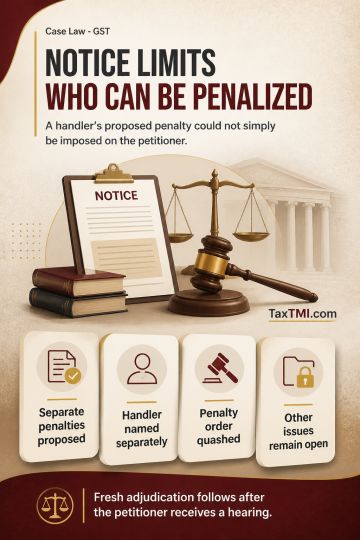
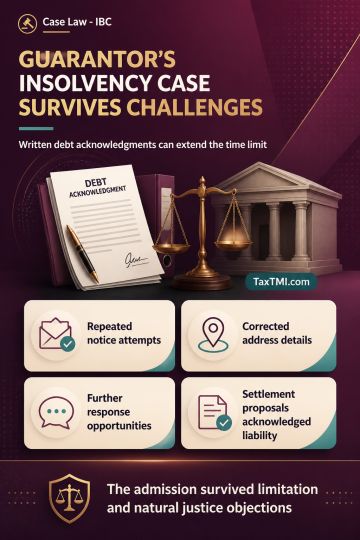
Service of notice and contractual debt acknowledgment preserved insolvency admission against a corporate guarantor despite limitation and natural just...
Original works exemption excludes standalone boulder transportation, leaving subcontracted railway-project transport services subject to service tax l...
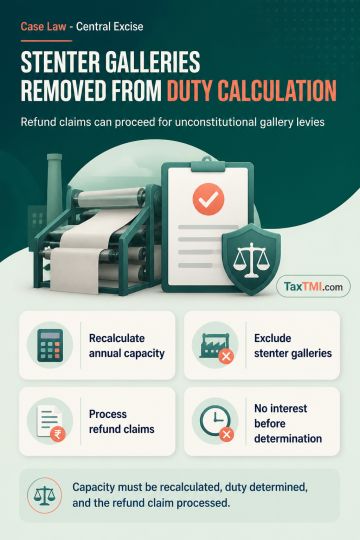
Annual production capacity determinations excluding stenter galleries support refunds for unconstitutional excise levies without an unjust-enrichment ...
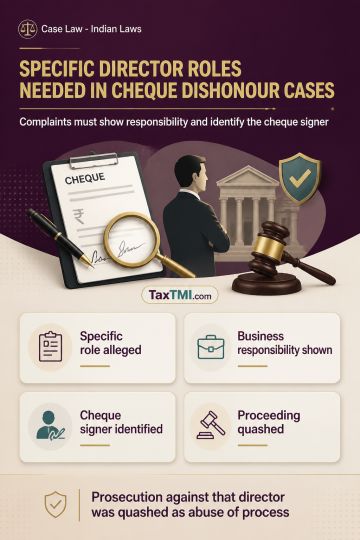
Vicarious liability for cheque dishonour requires specific allegations of responsibility and cheque signatory; generic director allegations cannot sus...
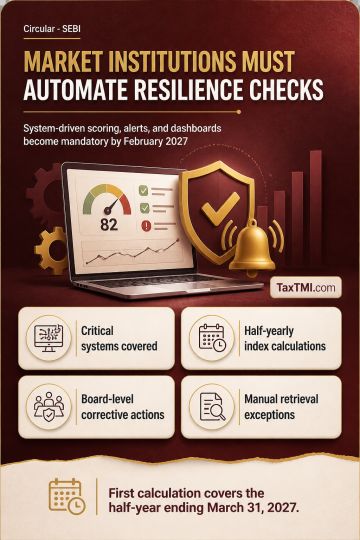
IT Resilience Index requires market infrastructure institutions to automate resilience scoring, early warnings, and continuous service-delivery monito...
The case pertains to revision u/s 263 regarding adjustment made in profit on account of tangible fixed assets. The assessee's audited financial statements indicated an increase in profit as per ICDS-V (tangible fixed assets). However, the Assessing Officer (AO) failed to add back the impugned amount despite the auditors' recommendation. The Commissioner of Income Tax (CIT) provisionally computed excess depreciation granted at 15%. The Appellate Tribunal held that the accounts' working of depreciation chargeable under the profit and loss account was correctly worked out and disclosed in the audit report filed with the return of income. The AO considered the assessee's explanation and dropped any adverse treatment. The CIT erroneously failed to consider the details in the audit report, leading to an erroneous conclusion. The order was quashed, and the decision was in favor of the assessee.
The case pertains to revision u/s 263 regarding adjustment made in profit on account of tangible fixed assets. The assessee's audited financial statements indicated an increase in profit as per ICDS-V (tangible fixed assets). However, the Assessing Officer (AO) failed to add back the impugned amount despite the auditors' recommendation. The Commissioner of Income Tax (CIT) provisionally computed excess depreciation granted at 15%. The Appellate Tribunal held that the accounts' working of depreciation chargeable under the profit and loss account was correctly worked out and disclosed in the audit report filed with the return of income. The AO considered the assessee's explanation and dropped any adverse treatment. The CIT erroneously failed to consider the details in the audit report, leading to an erroneous conclusion. The order was quashed, and the decision was in favor of the assessee.
Note: It is a system-generated summary and is for quick reference only.
 TaxTMI
  TaxTMI
 of 4828










 Join Channel