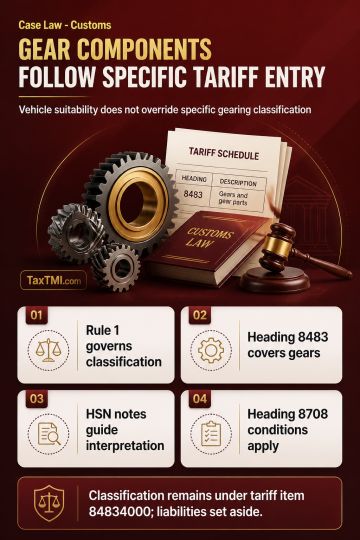
Tariff classification of vehicle gear components follows the specific gearing entry, displacing motor-vehicle parts classification and related liabili...
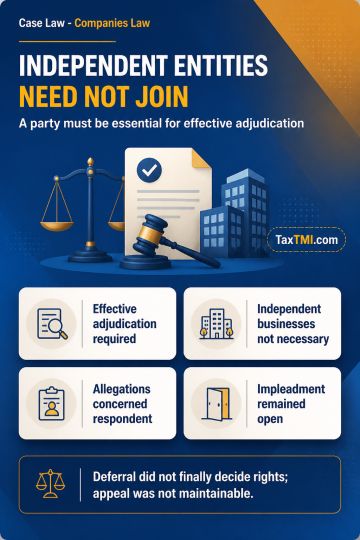
Necessary-party requirements limit impleadment of independent entities, while deferred consideration does not create an appealable adverse determinati...
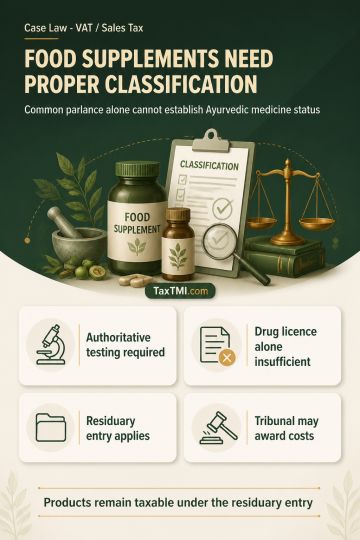
Food supplement classification requires common parlance and authoritative tests, preventing treatment as proprietary Ayurvedic medicines without suppo...
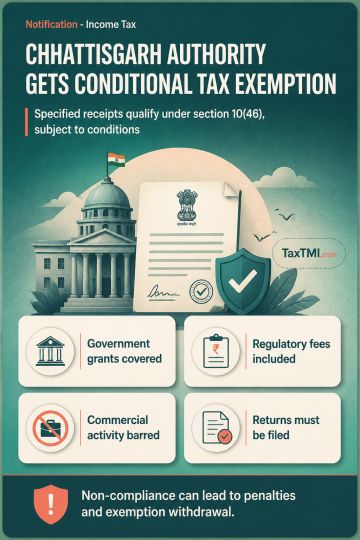
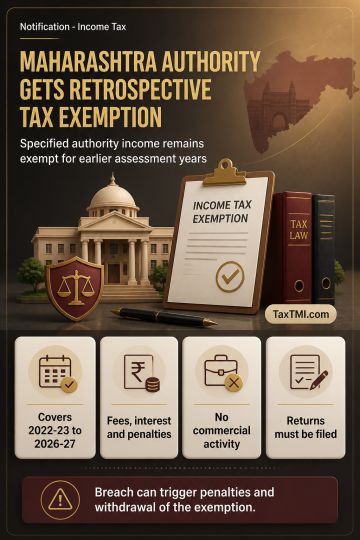
Specified regulatory authority income receives conditional tax exemption, subject to non-commercial activity, unchanged income character, and return f...
Tax exemption for regulatory authority income applies retrospectively, subject to non-commercial activity, unchanged income sources, and return-filing...
The Department initiated the case based on income tax documents, which were public documents, and the presumption is on their truthfulness. The difference in value based on ITR and ST-3 Returns was due to misstatement of facts. The Department proceeded based on information received from the Income Tax Department regarding income from service provision shown in ITR and income on which TDS was deducted, as well as the gross value of service shown in ST-3 Returns. While relying on TDS/26-AS statements, service tax demand cannot be made under the Service Tax Act, the appellant's conduct of failing to provide documents when asked for by the Department and lack of supporting evidence for the discrepancy cannot be ignored. The differential tax liability was upheld, and interest liability accrued u/s 75 of the Act due to suppression of correct taxable income. The penalty imposed on the appellant for suppressing taxable income was upheld. The appeal was dismissed as there were no reasons to interfere with the impugned order.
The Department initiated the case based on income tax documents, which were public documents, and the presumption is on their truthfulness. The difference in value based on ITR and ST-3 Returns was due to misstatement of facts. The Department proceeded based on information received from the Income Tax Department regarding income from service provision shown in ITR and income on which TDS was deducted, as well as the gross value of service shown in ST-3 Returns. While relying on TDS/26-AS statements, service tax demand cannot be made under the Service Tax Act, the appellant's conduct of failing to provide documents when asked for by the Department and lack of supporting evidence for the discrepancy cannot be ignored. The differential tax liability was upheld, and interest liability accrued u/s 75 of the Act due to suppression of correct taxable income. The penalty imposed on the appellant for suppressing taxable income was upheld. The appeal was dismissed as there were no reasons to interfere with the impugned order.
Note: It is a system-generated summary and is for quick reference only.
 TaxTMI
 of 4782




 Join Channel


 TaxTMI
