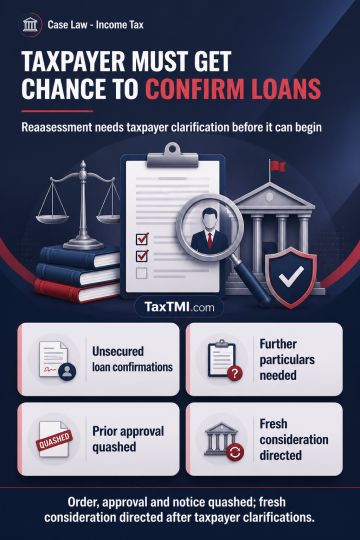
Opportunity to furnish unsecured-loan confirmations is required before reassessment initiation; proceedings require fresh consideration after taxpayer...
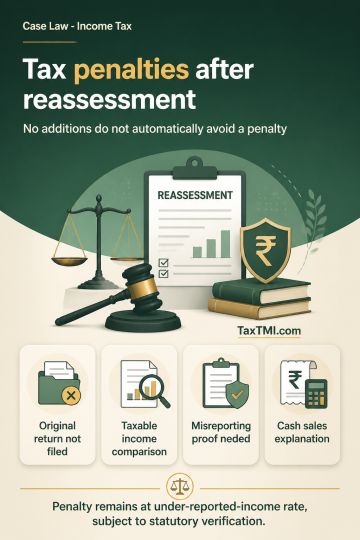
Under-reporting on a first reassessment return attracts penalty, while enhanced misreporting penalty requires proof of a statutory misreporting catego...
Form 26AS evidence requires successor-entity accounting verification after business transfer, while invoice-supported related-party advertising expend...
The High Court quashed the seizure order and allowed the petition, holding that once the E-way bill was produced before the seizure order could be passed, it could not be said that any contravention of the Act's provisions had occurred. The court observed that although the goods were initially detained due to the absence of an E-way bill, the petitioner subsequently produced the E-way bill before the seizure order was issued. The authorities had the power to survey the petitioner's business premises to verify the transaction's correctness but chose not to exercise it. The court distinguished the case from the precedent cited, where goods were seized due to a complete lack of accompanying documents.
The High Court quashed the seizure order and allowed the petition, holding that once the E-way bill was produced before the seizure order could be passed, it could not be said that any contravention of the Act's provisions had occurred. The court observed that although the goods were initially detained due to the absence of an E-way bill, the petitioner subsequently produced the E-way bill before the seizure order was issued. The authorities had the power to survey the petitioner's business premises to verify the transaction's correctness but chose not to exercise it. The court distinguished the case from the precedent cited, where goods were seized due to a complete lack of accompanying documents.
Note: It is a system-generated summary and is for quick reference only.
 TaxTMI
  TaxTMI
 of 4920