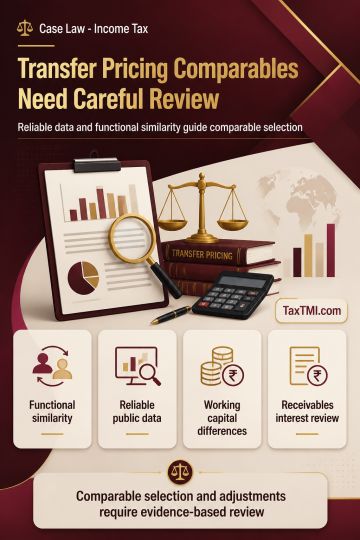
Transfer pricing comparability requires functional alignment, reliable financial data, and careful review of working capital and receivables adjustmen...
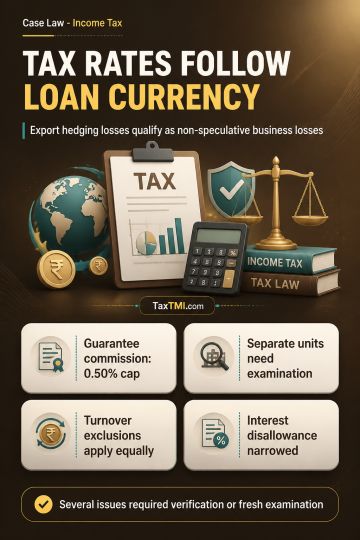
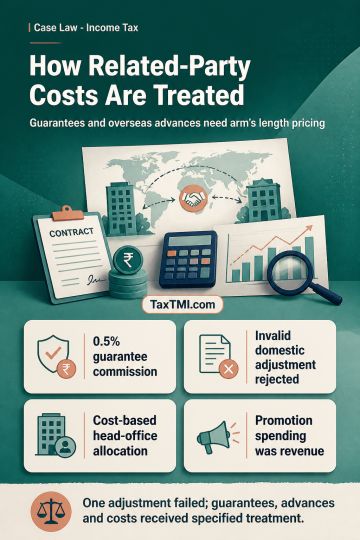
Transfer pricing rules require benchmarking corporate guarantees and associated-enterprise advances, while invalid domestic-transaction adjustments ca...
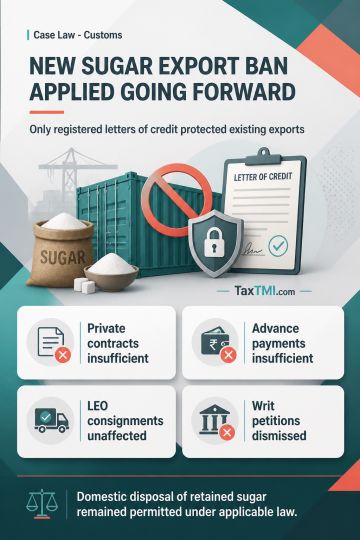
Prospective sugar export prohibition required registered letters of credit; private contracts and export quotas created no enforceable continuation ri...
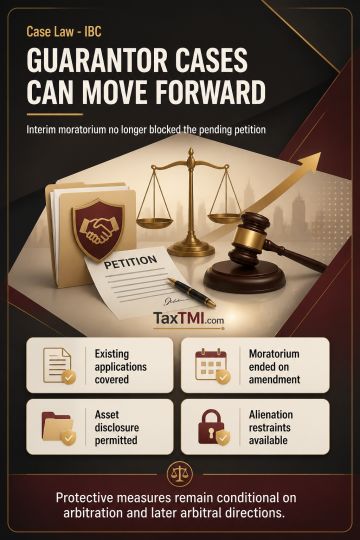
Retroactive interim-moratorium exclusion permits protective asset disclosure and preservation measures against personal guarantors pending arbitration...
Page of 4798
Press 'Enter' after typing page number.
461 to 480 of 95957 Results
❮
❯
❯❯
0 / 200
Expand Note
Add to Folder
No Folders have been created
+
Are you sure you want to delete "My most important" ?
The case involved a dispute over the classification of services as either Supply of Tangible Goods Service or not, regarding the activity of allowing clients to use railway rakes for goods transportation. It was held that the appellant lacked control over the rakes once handed to Indian Railways, making the service received by clients from Railways "Transportation of goods by Rail," not a supply of tangible goods service. The possession and control of the rakes by Indian Railways, not the appellant, precluded the activity from being taxable. The dispute period from 2008-09 to 2009-10 was deemed time-barred, with no fresh material supporting tax evasion. The demands were set aside on both merit and limitation grounds, and the appeal was allowed by CESTAT.
The case involved a dispute over the classification of services as either Supply of Tangible Goods Service or not, regarding the activity of allowing clients to use railway rakes for goods transportation. It was held that the appellant lacked control over the rakes once handed to Indian Railways, making the service received by clients from Railways "Transportation of goods by Rail," not a supply of tangible goods service. The possession and control of the rakes by Indian Railways, not the appellant, precluded the activity from being taxable. The dispute period from 2008-09 to 2009-10 was deemed time-barred, with no fresh material supporting tax evasion. The demands were set aside on both merit and limitation grounds, and the appeal was allowed by CESTAT.
Note: It is a system-generated summary and is for quick reference only.
 TaxTMI
 of 4798



 Join Channel


 TaxTMI