Ratification of resignation acceptance validates separation retrospectively, while withdrawal may be refused through reasoned administrative discretio...
Nature-dependent electricity contracts receive new Ind AS accounting, hedge designation, transition and financial-statement disclosure requirements fr...
Alternative GST remedy permitted protective writ intervention for ex parte adjudication, preserving independent appellate review of input tax credit d...
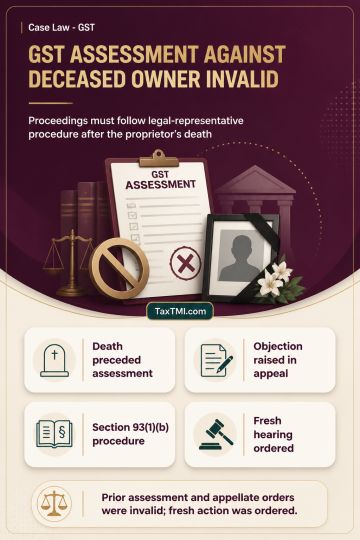
Assessment against deceased sole proprietor requires proceedings against the legal representative, rendering prior assessment and appellate orders inv...
Residential waste collection classification under SAC 999423 defeats composite-supply exemption where facilitating goods are not transferred to the lo...
Penalty u/s 271(1)(c) was imposed for excess deduction claimed u/s 10B. The assessee furnished all relevant facts for computing total income, and provided detailed explanations regarding the claim u/s 10B, including the number of manufacturing divisions, bifurcation of expenditure, and availability of carried forward losses. The explanation was not found false, and the onus to prove falsity lies on the revenue. The claim was an allowable deduction, though the quantum was reworked by the Assessing Officer using different arithmetic. All details and justifications were provided in the return itself. The amount of tax sought to be evaded under explanation 1 to section 271(1)(c) was indeterminable for imposing penalty. The assessee's decision to not appeal the reduction of claim does not imply lack of bona fides. The CIT(A) rightly deleted the penalty, and no interference is warranted.
Penalty u/s 271(1)(c) was imposed for excess deduction claimed u/s 10B. The assessee furnished all relevant facts for computing total income, and provided detailed explanations regarding the claim u/s 10B, including the number of manufacturing divisions, bifurcation of expenditure, and availability of carried forward losses. The explanation was not found false, and the onus to prove falsity lies on the revenue. The claim was an allowable deduction, though the quantum was reworked by the Assessing Officer using different arithmetic. All details and justifications were provided in the return itself. The amount of tax sought to be evaded under explanation 1 to section 271(1)(c) was indeterminable for imposing penalty. The assessee's decision to not appeal the reduction of claim does not imply lack of bona fides. The CIT(A) rightly deleted the penalty, and no interference is warranted.
Note: It is a system-generated summary and is for quick reference only.
 TaxTMI
 of 4798





















 Join Channel


 TaxTMI
