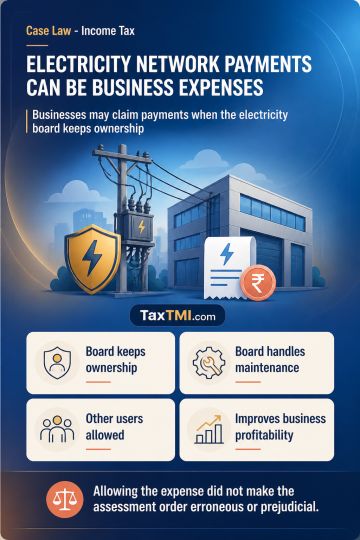
Electricity network contributions remain revenue expenditure where ownership and maintenance stay with the electricity board, supporting business prof...
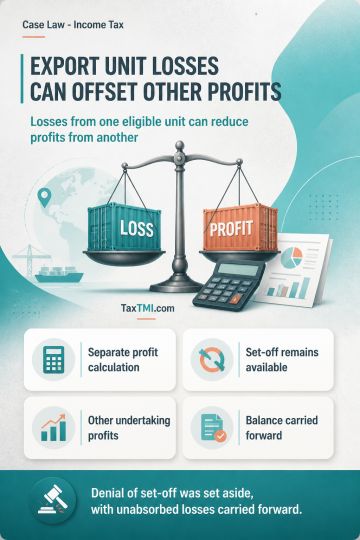
Penalty u/s 271(1)(c) was imposed for excess deduction claimed u/s 10B. The assessee furnished all relevant facts for computing total income, and provided detailed explanations regarding the claim u/s 10B, including the number of manufacturing divisions, bifurcation of expenditure, and availability of carried forward losses. The explanation was not found false, and the onus to prove falsity lies on the revenue. The claim was an allowable deduction, though the quantum was reworked by the Assessing Officer using different arithmetic. All details and justifications were provided in the return itself. The amount of tax sought to be evaded under explanation 1 to section 271(1)(c) was indeterminable for imposing penalty. The assessee's decision to not appeal the reduction of claim does not imply lack of bona fides. The CIT(A) rightly deleted the penalty, and no interference is warranted.
Penalty u/s 271(1)(c) was imposed for excess deduction claimed u/s 10B. The assessee furnished all relevant facts for computing total income, and provided detailed explanations regarding the claim u/s 10B, including the number of manufacturing divisions, bifurcation of expenditure, and availability of carried forward losses. The explanation was not found false, and the onus to prove falsity lies on the revenue. The claim was an allowable deduction, though the quantum was reworked by the Assessing Officer using different arithmetic. All details and justifications were provided in the return itself. The amount of tax sought to be evaded under explanation 1 to section 271(1)(c) was indeterminable for imposing penalty. The assessee's decision to not appeal the reduction of claim does not imply lack of bona fides. The CIT(A) rightly deleted the penalty, and no interference is warranted.
Note: It is a system-generated summary and is for quick reference only.
 TaxTMI
 of 4798








 Join Channel


 TaxTMI
