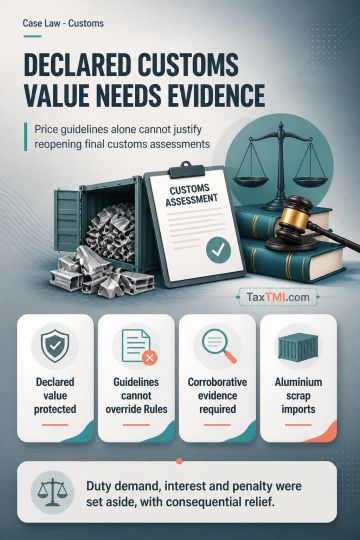
Transaction value cannot be rejected solely on non-statutory valuation guidelines without corroborative evidence supporting reassessment of final cust...
Cross-examination rights and corroborated evidence limit customs penalties for misdeclaration in genuine import transactions involving documented clea...
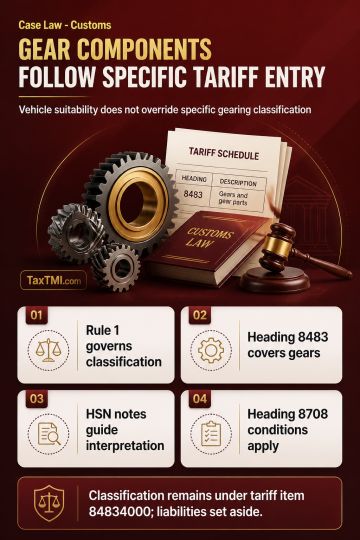
Tariff classification of vehicle gear components follows the specific gearing entry, displacing motor-vehicle parts classification and related liabili...
Necessary-party requirements limit impleadment of independent entities, while deferred consideration does not create an appealable adverse determinati...
Food supplement classification requires common parlance and authoritative tests, preventing treatment as proprietary Ayurvedic medicines without suppo...
The bogus transactions are a camouflage and dishonest attempt to avoid tax, resulting in addition to the assessee's income. The AO's approach should be well-considered, adhering to lawful norms and principles. If transactions are found bogus, they must be discarded by making appropriate permissible additions. The CIT(A) erred in reducing the gross profit returned by the assessee from 12% to 4.74%, as it had no bearing on purchases made by procuring bills to save VAT. The revenue's appeal was allowed, directing the AO to assess income from such transactions at 12.5% in each assessment year on the purchases made. The assessee accepted this finding as beneficial. If authorities view purchases as questionable or bogus, they must undertake necessary inquiries, including procuring information from other departments, to ascertain correct facts and bring such transactions to tax to prevent tax evasion and ensure real income is taxed.
The bogus transactions are a camouflage and dishonest attempt to avoid tax, resulting in addition to the assessee's income. The AO's approach should be well-considered, adhering to lawful norms and principles. If transactions are found bogus, they must be discarded by making appropriate permissible additions. The CIT(A) erred in reducing the gross profit returned by the assessee from 12% to 4.74%, as it had no bearing on purchases made by procuring bills to save VAT. The revenue's appeal was allowed, directing the AO to assess income from such transactions at 12.5% in each assessment year on the purchases made. The assessee accepted this finding as beneficial. If authorities view purchases as questionable or bogus, they must undertake necessary inquiries, including procuring information from other departments, to ascertain correct facts and bring such transactions to tax to prevent tax evasion and ensure real income is taxed.
Note: It is a system-generated summary and is for quick reference only.
 TaxTMI
 of 4801
















 Join Channel


 TaxTMI
