Prolonged sterilisation of development rights supports capital-gains treatment, while business-income disallowances cannot govern capital-gains comput...
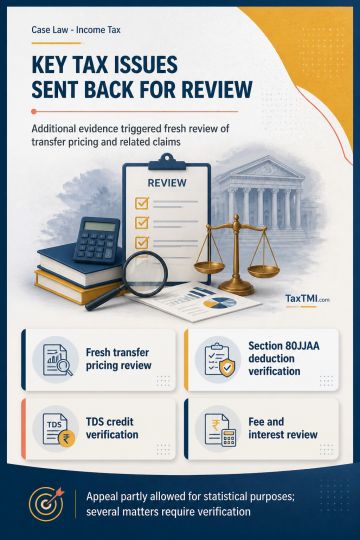
Additional evidence in transfer pricing dispute leads to fresh examination, while tax deductions, TDS credit, fee and refund interest require verifica...
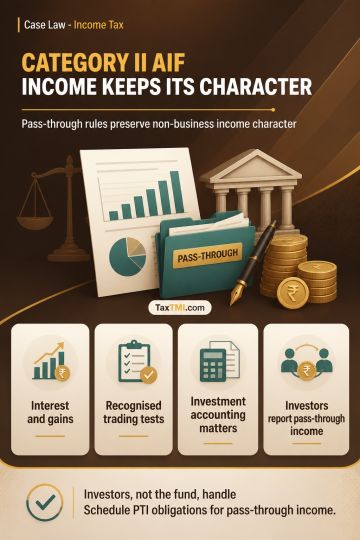
Category II AIF pass-through taxation preserves non-business income character; investment receipts cannot be reclassified without applying recognised ...
Mutual fund maturity rules require proper rollover, redemption, disclosure, and due diligence; investor gains cannot excuse regulatory breaches or pen...
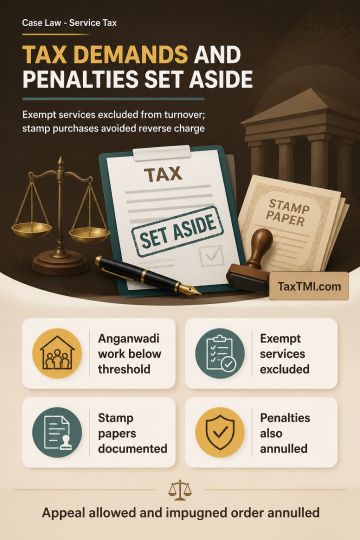
Threshold exemption excludes exempt services, while stamp-paper purchases avoid reverse charge; consequential service tax penalties were also set asid...
The non-profit organization, sponsored by the Ministry of Commerce and registered u/s 25 of the Companies Act, was granted exemption u/s 10(23C)(iv) of the Income Tax Act. Its main activity is promoting exports of the leather industry by facilitating participation of members in trade fairs. The council serves as a bridge between exporters, overseas buyers, and the government. The exemption was granted in earlier years based on the ITAT order, which held that the council's activities do not constitute business, trade, or commerce, and the proviso to Section 2(15) does not apply. For applying the second proviso to Section 2(15), receipts from providing rental space in fairs and trade shows should be considered. Only the profit element, not the entire receipt, should be considered as the numerator for complying with the 20% limit under the second proviso. The council incurred a loss from trade fair activities, and the net surplus of Rs. 7.62 crores was less than 20% of the total receipts. Thus, the ITAT set aside the orders denying exemption u/s 10(23C)(iv).
The non-profit organization, sponsored by the Ministry of Commerce and registered u/s 25 of the Companies Act, was granted exemption u/s 10(23C)(iv) of the Income Tax Act. Its main activity is promoting exports of the leather industry by facilitating participation of members in trade fairs. The council serves as a bridge between exporters, overseas buyers, and the government. The exemption was granted in earlier years based on the ITAT order, which held that the council's activities do not constitute business, trade, or commerce, and the proviso to Section 2(15) does not apply. For applying the second proviso to Section 2(15), receipts from providing rental space in fairs and trade shows should be considered. Only the profit element, not the entire receipt, should be considered as the numerator for complying with the 20% limit under the second proviso. The council incurred a loss from trade fair activities, and the net surplus of Rs. 7.62 crores was less than 20% of the total receipts. Thus, the ITAT set aside the orders denying exemption u/s 10(23C)(iv).
Note: It is a system-generated summary and is for quick reference only.
 TaxTMI
 of 4805








 Join Channel


 TaxTMI
