Transfer pricing and tax deductions upheld on established principles, while employee contributions and warranty provisions returned for fresh examinat...
Captive transfer pricing relies on industrial consumer tariffs, while genuine quotations can benchmark effluent treatment transfers under the Other Me...
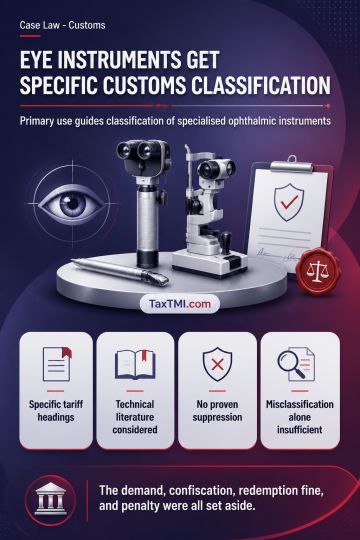
Specific tariff classification for ophthalmic instruments and extended limitation principles determine the treatment of duty demands, confiscation, an...
Integrated golf function determines classification, placing launch monitors and simulators under other golf equipment rather than measuring instrument...
Public servant status under anti-corruption law extends to recognised stock exchange leadership; constitutional and sanction challenges do not succeed...
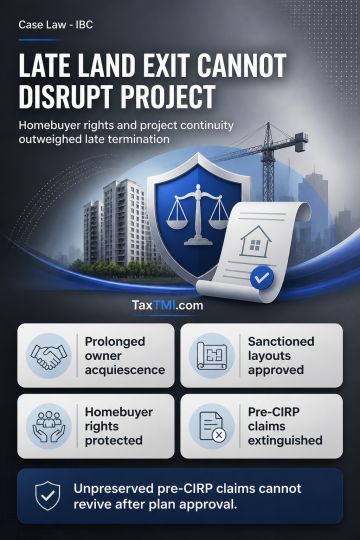
Acquiescence, homebuyer protection and clean-slate resolution principles prevent landowners from disrupting an integrated project through late termina...
The non-profit organization, sponsored by the Ministry of Commerce and registered u/s 25 of the Companies Act, was granted exemption u/s 10(23C)(iv) of the Income Tax Act. Its main activity is promoting exports of the leather industry by facilitating participation of members in trade fairs. The council serves as a bridge between exporters, overseas buyers, and the government. The exemption was granted in earlier years based on the ITAT order, which held that the council's activities do not constitute business, trade, or commerce, and the proviso to Section 2(15) does not apply. For applying the second proviso to Section 2(15), receipts from providing rental space in fairs and trade shows should be considered. Only the profit element, not the entire receipt, should be considered as the numerator for complying with the 20% limit under the second proviso. The council incurred a loss from trade fair activities, and the net surplus of Rs. 7.62 crores was less than 20% of the total receipts. Thus, the ITAT set aside the orders denying exemption u/s 10(23C)(iv).
The non-profit organization, sponsored by the Ministry of Commerce and registered u/s 25 of the Companies Act, was granted exemption u/s 10(23C)(iv) of the Income Tax Act. Its main activity is promoting exports of the leather industry by facilitating participation of members in trade fairs. The council serves as a bridge between exporters, overseas buyers, and the government. The exemption was granted in earlier years based on the ITAT order, which held that the council's activities do not constitute business, trade, or commerce, and the proviso to Section 2(15) does not apply. For applying the second proviso to Section 2(15), receipts from providing rental space in fairs and trade shows should be considered. Only the profit element, not the entire receipt, should be considered as the numerator for complying with the 20% limit under the second proviso. The council incurred a loss from trade fair activities, and the net surplus of Rs. 7.62 crores was less than 20% of the total receipts. Thus, the ITAT set aside the orders denying exemption u/s 10(23C)(iv).
Note: It is a system-generated summary and is for quick reference only.
 TaxTMI
 of 4803












 Join Channel


 TaxTMI