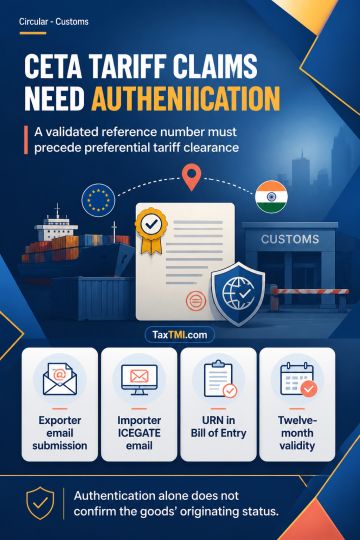
Origin Declaration authentication governs preferential tariff claims under India-UK CETA, requiring a validated reference number before import clearan...
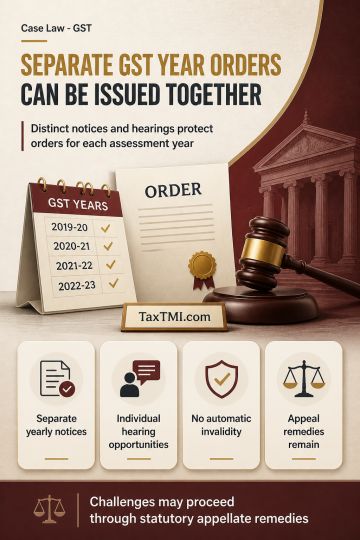
Separate assessment orders for different years remain valid when distinct notices and hearing opportunities prevent prejudice from combined proceeding...
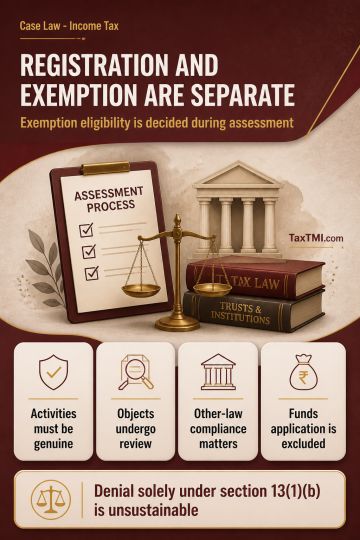
Defined public benefit can retain charitable character; registration renewal requires examining genuine activities and legal compliance, not surplus a...
Capital reduction is distinct from share buy-back, preventing buy-back tax; restructuring interest and related business deductions also survive scruti...
The non-profit organization, sponsored by the Ministry of Commerce and registered u/s 25 of the Companies Act, was granted exemption u/s 10(23C)(iv) of the Income Tax Act. Its main activity is promoting exports of the leather industry by facilitating participation of members in trade fairs. The council serves as a bridge between exporters, overseas buyers, and the government. The exemption was granted in earlier years based on the ITAT order, which held that the council's activities do not constitute business, trade, or commerce, and the proviso to Section 2(15) does not apply. For applying the second proviso to Section 2(15), receipts from providing rental space in fairs and trade shows should be considered. Only the profit element, not the entire receipt, should be considered as the numerator for complying with the 20% limit under the second proviso. The council incurred a loss from trade fair activities, and the net surplus of Rs. 7.62 crores was less than 20% of the total receipts. Thus, the ITAT set aside the orders denying exemption u/s 10(23C)(iv).
The non-profit organization, sponsored by the Ministry of Commerce and registered u/s 25 of the Companies Act, was granted exemption u/s 10(23C)(iv) of the Income Tax Act. Its main activity is promoting exports of the leather industry by facilitating participation of members in trade fairs. The council serves as a bridge between exporters, overseas buyers, and the government. The exemption was granted in earlier years based on the ITAT order, which held that the council's activities do not constitute business, trade, or commerce, and the proviso to Section 2(15) does not apply. For applying the second proviso to Section 2(15), receipts from providing rental space in fairs and trade shows should be considered. Only the profit element, not the entire receipt, should be considered as the numerator for complying with the 20% limit under the second proviso. The council incurred a loss from trade fair activities, and the net surplus of Rs. 7.62 crores was less than 20% of the total receipts. Thus, the ITAT set aside the orders denying exemption u/s 10(23C)(iv).
Note: It is a system-generated summary and is for quick reference only.
 TaxTMI
 of 4803
















 Join Channel


 TaxTMI
