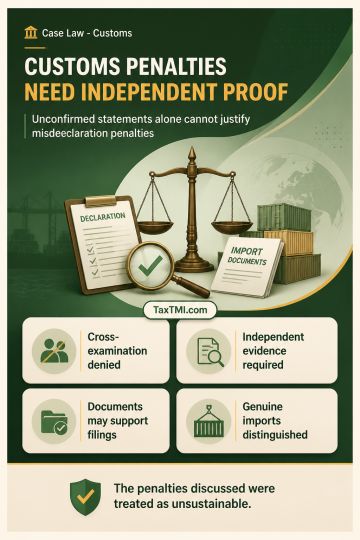
Cross-examination rights and corroborated evidence limit customs penalties for misdeclaration in genuine import transactions involving documented clea...
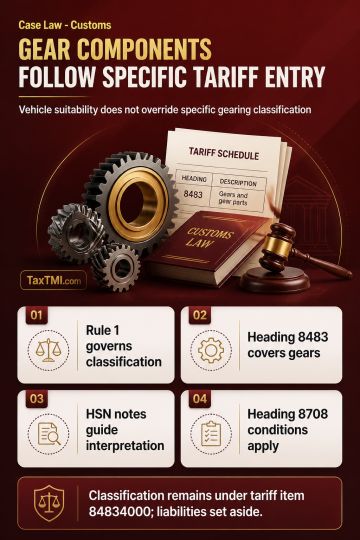
Tariff classification of vehicle gear components follows the specific gearing entry, displacing motor-vehicle parts classification and related liabili...
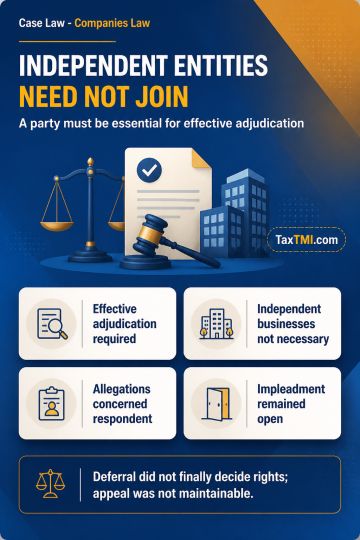
Necessary-party requirements limit impleadment of independent entities, while deferred consideration does not create an appealable adverse determinati...
Food supplement classification requires common parlance and authoritative tests, preventing treatment as proprietary Ayurvedic medicines without suppo...
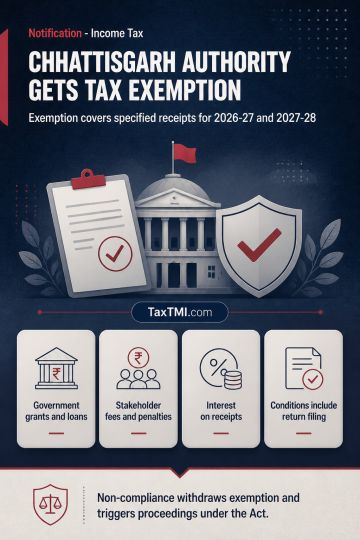
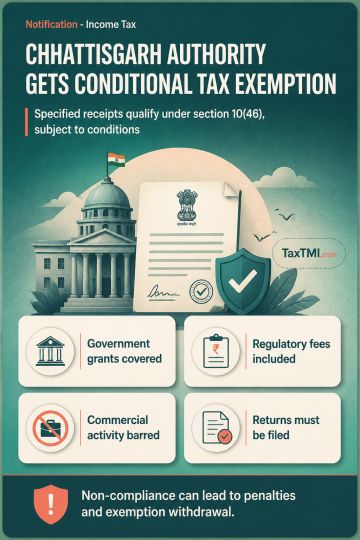
Specified regulatory authority income receives conditional tax exemption, subject to non-commercial activity, unchanged income character, and return f...
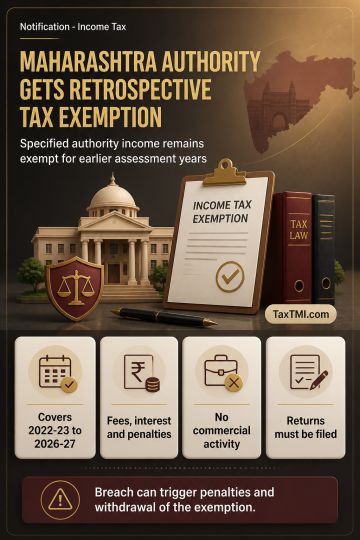
Tax exemption for regulatory authority income applies retrospectively, subject to non-commercial activity, unchanged income sources, and return-filing...
The non-profit organization, sponsored by the Ministry of Commerce and registered u/s 25 of the Companies Act, was granted exemption u/s 10(23C)(iv) of the Income Tax Act. Its main activity is promoting exports of the leather industry by facilitating participation of members in trade fairs. The council serves as a bridge between exporters, overseas buyers, and the government. The exemption was granted in earlier years based on the ITAT order, which held that the council's activities do not constitute business, trade, or commerce, and the proviso to Section 2(15) does not apply. For applying the second proviso to Section 2(15), receipts from providing rental space in fairs and trade shows should be considered. Only the profit element, not the entire receipt, should be considered as the numerator for complying with the 20% limit under the second proviso. The council incurred a loss from trade fair activities, and the net surplus of Rs. 7.62 crores was less than 20% of the total receipts. Thus, the ITAT set aside the orders denying exemption u/s 10(23C)(iv).
The non-profit organization, sponsored by the Ministry of Commerce and registered u/s 25 of the Companies Act, was granted exemption u/s 10(23C)(iv) of the Income Tax Act. Its main activity is promoting exports of the leather industry by facilitating participation of members in trade fairs. The council serves as a bridge between exporters, overseas buyers, and the government. The exemption was granted in earlier years based on the ITAT order, which held that the council's activities do not constitute business, trade, or commerce, and the proviso to Section 2(15) does not apply. For applying the second proviso to Section 2(15), receipts from providing rental space in fairs and trade shows should be considered. Only the profit element, not the entire receipt, should be considered as the numerator for complying with the 20% limit under the second proviso. The council incurred a loss from trade fair activities, and the net surplus of Rs. 7.62 crores was less than 20% of the total receipts. Thus, the ITAT set aside the orders denying exemption u/s 10(23C)(iv).
Note: It is a system-generated summary and is for quick reference only.
 TaxTMI
 of 4798








 Join Channel


 TaxTMI