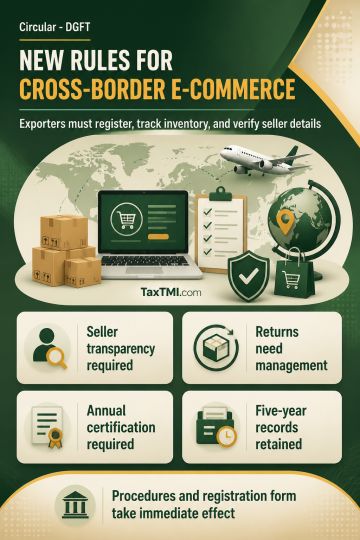
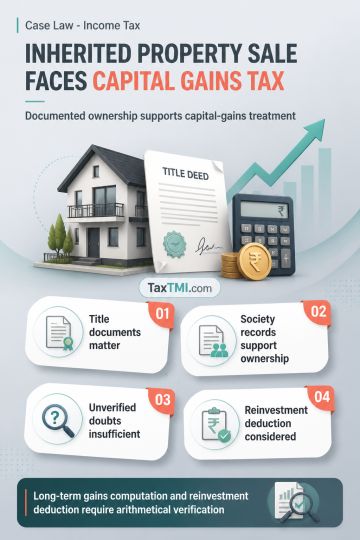
Inherited property sale proceeds require capital-gains treatment where ownership is supported by evidence, not suspicion or unverified signature doubt...
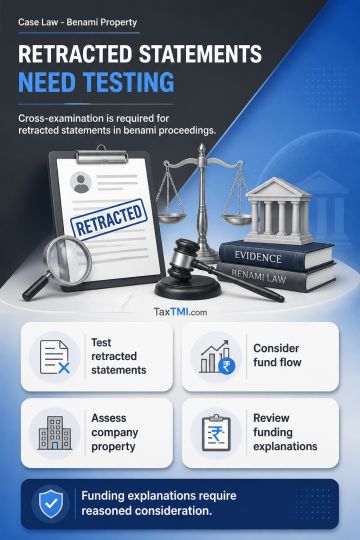
Cross-examination of retracted statements is essential where foundational evidence supports a benami allegation and documented funding explanations re...
Capital-goods exemption covers plant-modernisation accessories, while the import restriction applies only to earlier capital-goods components and spar...
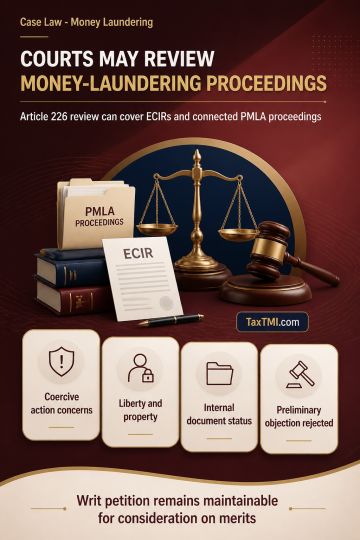
Constitutional judicial review permits challenges to ECIRs and connected money-laundering proceedings where coercive action affects fundamental intere...
The non-profit organization, sponsored by the Ministry of Commerce and registered u/s 25 of the Companies Act, was granted exemption u/s 10(23C)(iv) of the Income Tax Act. Its main activity is promoting exports of the leather industry by facilitating participation of members in trade fairs. The council serves as a bridge between exporters, overseas buyers, and the government. The exemption was granted in earlier years based on the ITAT order, which held that the council's activities do not constitute business, trade, or commerce, and the proviso to Section 2(15) does not apply. For applying the second proviso to Section 2(15), receipts from providing rental space in fairs and trade shows should be considered. Only the profit element, not the entire receipt, should be considered as the numerator for complying with the 20% limit under the second proviso. The council incurred a loss from trade fair activities, and the net surplus of Rs. 7.62 crores was less than 20% of the total receipts. Thus, the ITAT set aside the orders denying exemption u/s 10(23C)(iv).
The non-profit organization, sponsored by the Ministry of Commerce and registered u/s 25 of the Companies Act, was granted exemption u/s 10(23C)(iv) of the Income Tax Act. Its main activity is promoting exports of the leather industry by facilitating participation of members in trade fairs. The council serves as a bridge between exporters, overseas buyers, and the government. The exemption was granted in earlier years based on the ITAT order, which held that the council's activities do not constitute business, trade, or commerce, and the proviso to Section 2(15) does not apply. For applying the second proviso to Section 2(15), receipts from providing rental space in fairs and trade shows should be considered. Only the profit element, not the entire receipt, should be considered as the numerator for complying with the 20% limit under the second proviso. The council incurred a loss from trade fair activities, and the net surplus of Rs. 7.62 crores was less than 20% of the total receipts. Thus, the ITAT set aside the orders denying exemption u/s 10(23C)(iv).
Note: It is a system-generated summary and is for quick reference only.
 TaxTMI
 of 4790









 Join Channel


 TaxTMI