Transaction value rejection requires reliable corroboration; refundable VAT is excluded and temporary registration does not defeat new-vehicle exempti...
Appellate jurisdiction remains available where a wrist-worn gold ornament cannot conclusively be characterised as imported baggage at the preliminary ...
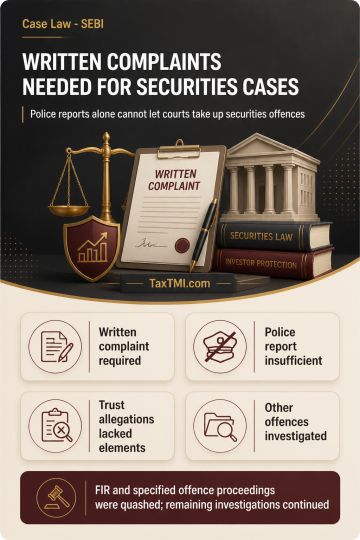
Written complaint requirement bars cognizance on police reports for securities offences, while unsupported breach of trust and cheating allegations fa...
Risk-based postal import clearance standardises electronic assessment, document requests, duty realisation and delivery controls at Foreign Post Offic...
Customs Cargo Service Provider appointment extends custodianship to additional terminal land, subject to cargo-control, security and licence condition...
The assessee-Respondent classified the aluminum circles under CTH 76069110 as raw materials, while the department proposed classification under CTH 7616, and the DRI suggested CTH 7615. The tribunal held that when revenue disputes classification, the burden is heavily on revenue to justify why the declared classification is wrong and why its proposed classification should be accepted. The revenue failed to provide evidence or dispute the assessee's contention and the chartered engineer's report that the articles were raw materials undergoing further processing. Rule 2(b) is applicable as heading 7616 does not require 'otherwise' for classification of material containing a combination of metals. Heading 7606 specifically mentions aluminum circles under 76069110, and since it is a composite product with predominant material being aluminum, by implication of Rule 2(b), it has to be classified as an aluminum circle. The department failed to make a case for interference with the First Appellate Authority's findings, and the classification of articles as confirmed in the impugned order was held to be in order. The appeal was dismissed.
The assessee-Respondent classified the aluminum circles under CTH 76069110 as raw materials, while the department proposed classification under CTH 7616, and the DRI suggested CTH 7615. The tribunal held that when revenue disputes classification, the burden is heavily on revenue to justify why the declared classification is wrong and why its proposed classification should be accepted. The revenue failed to provide evidence or dispute the assessee's contention and the chartered engineer's report that the articles were raw materials undergoing further processing. Rule 2(b) is applicable as heading 7616 does not require 'otherwise' for classification of material containing a combination of metals. Heading 7606 specifically mentions aluminum circles under 76069110, and since it is a composite product with predominant material being aluminum, by implication of Rule 2(b), it has to be classified as an aluminum circle. The department failed to make a case for interference with the First Appellate Authority's findings, and the classification of articles as confirmed in the impugned order was held to be in order. The appeal was dismissed.
Note: It is a system-generated summary and is for quick reference only.
 TaxTMI
 of 4788








 Join Channel


 TaxTMI