Transaction value cannot be rejected solely on non-statutory valuation guidelines without corroborative evidence supporting reassessment of final cust...
Cross-examination rights and corroborated evidence limit customs penalties for misdeclaration in genuine import transactions involving documented clea...
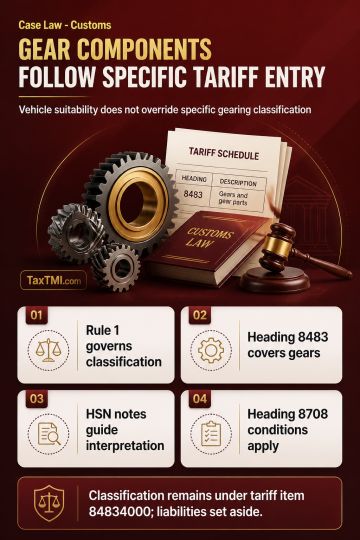
Tariff classification of vehicle gear components follows the specific gearing entry, displacing motor-vehicle parts classification and related liabili...
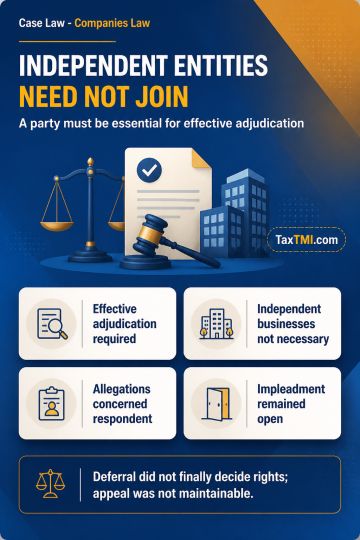
Necessary-party requirements limit impleadment of independent entities, while deferred consideration does not create an appealable adverse determinati...
Food supplement classification requires common parlance and authoritative tests, preventing treatment as proprietary Ayurvedic medicines without suppo...
The Finance (No. 2) Bill, 2024 encompasses provisions relating to tax proposals for the Union Budget 2024-25. It outlines amendments to various direct and indirect tax laws, including Income Tax Act, Customs Act, Central Excise Act, and Finance Act. The bill covers changes in tax rates, deductions, exemptions, and compliance measures. It aims to streamline tax administration, promote economic growth, and enhance revenue mobilization. The bill underwent parliamentary scrutiny and was passed by the Lok Sabha, incorporating relevant amendments.
The Finance (No. 2) Bill, 2024 encompasses provisions relating to tax proposals for the Union Budget 2024-25. It outlines amendments to various direct and indirect tax laws, including Income Tax Act, Customs Act, Central Excise Act, and Finance Act. The bill covers changes in tax rates, deductions, exemptions, and compliance measures. It aims to streamline tax administration, promote economic growth, and enhance revenue mobilization. The bill underwent parliamentary scrutiny and was passed by the Lok Sabha, incorporating relevant amendments.
Note: It is a system-generated summary and is for quick reference only.
 TaxTMI
 of 4801




















 Join Channel


 TaxTMI
