Inherited property sale proceeds require capital-gains treatment where ownership is supported by evidence, not suspicion or unverified signature doubt...
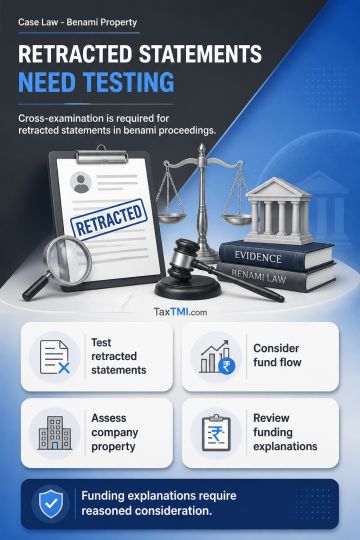
Cross-examination of retracted statements is essential where foundational evidence supports a benami allegation and documented funding explanations re...
Capital-goods exemption covers plant-modernisation accessories, while the import restriction applies only to earlier capital-goods components and spar...
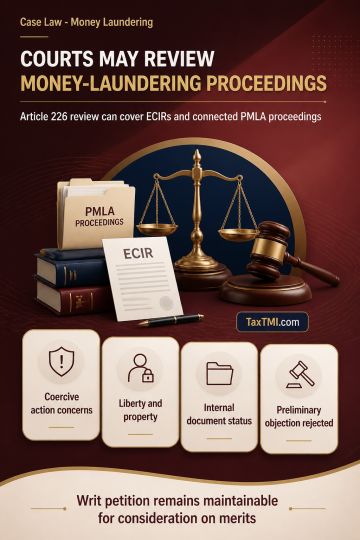
Constitutional judicial review permits challenges to ECIRs and connected money-laundering proceedings where coercive action affects fundamental intere...
The case dealt with the taxability of income in India related to royalty receipts and Tax Deducted at Source (TDS) u/s 195. The respondent did not deduct tax on remittance to a foreign party for software procurement, claiming it wasn't royalty. Both the CIT(A) and Tribunal agreed. The High Court referred to precedent stating non-retrospective application of Explanation 6 to Section 9(1)(vi) of the Income Tax Act. The Supreme Court upheld this view, clarifying that Explanation 6 cannot be applied retrospectively. Rejecting the Revenue's attempt to apply Explanation 4 retrospectively, the court ruled in favor of the assessee.
The case dealt with the taxability of income in India related to royalty receipts and Tax Deducted at Source (TDS) u/s 195. The respondent did not deduct tax on remittance to a foreign party for software procurement, claiming it wasn't royalty. Both the CIT(A) and Tribunal agreed. The High Court referred to precedent stating non-retrospective application of Explanation 6 to Section 9(1)(vi) of the Income Tax Act. The Supreme Court upheld this view, clarifying that Explanation 6 cannot be applied retrospectively. Rejecting the Revenue's attempt to apply Explanation 4 retrospectively, the court ruled in favor of the assessee.
Note: It is a system-generated summary and is for quick reference only.
 TaxTMI
 of 4786













 Join Channel


 TaxTMI