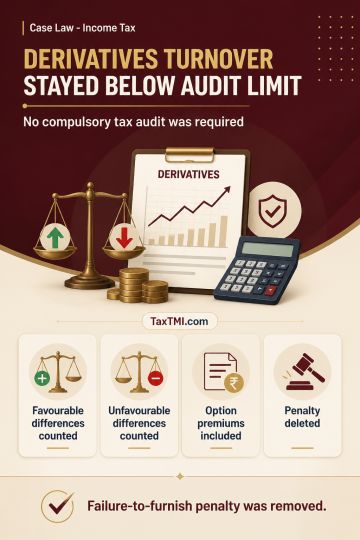
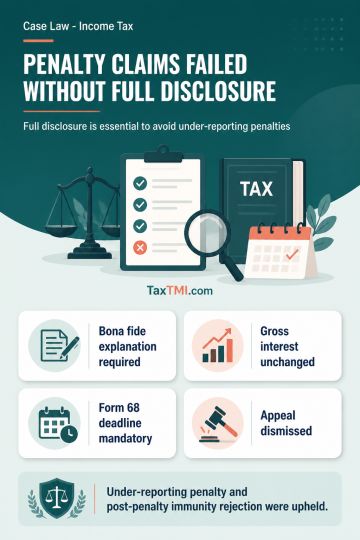
Bona fide disclosure requirements govern under-reporting penalties, and post-penalty immunity applications cannot secure available statutory protectio...
Certificate-of-origin verification procedure governs preferential customs benefits; denial without retroactive verification was set aside with consequ...
Disciplinary Committee jurisdiction and mandatory investigation requirements invalidated cancellation of an insolvency professional's registration and...
Retention of seized property survives where recorded reasons support proceeds of crime, while stayed investigation periods are excluded from limitatio...
The case dealt with the taxability of income in India related to royalty receipts and Tax Deducted at Source (TDS) u/s 195. The respondent did not deduct tax on remittance to a foreign party for software procurement, claiming it wasn't royalty. Both the CIT(A) and Tribunal agreed. The High Court referred to precedent stating non-retrospective application of Explanation 6 to Section 9(1)(vi) of the Income Tax Act. The Supreme Court upheld this view, clarifying that Explanation 6 cannot be applied retrospectively. Rejecting the Revenue's attempt to apply Explanation 4 retrospectively, the court ruled in favor of the assessee.
The case dealt with the taxability of income in India related to royalty receipts and Tax Deducted at Source (TDS) u/s 195. The respondent did not deduct tax on remittance to a foreign party for software procurement, claiming it wasn't royalty. Both the CIT(A) and Tribunal agreed. The High Court referred to precedent stating non-retrospective application of Explanation 6 to Section 9(1)(vi) of the Income Tax Act. The Supreme Court upheld this view, clarifying that Explanation 6 cannot be applied retrospectively. Rejecting the Revenue's attempt to apply Explanation 4 retrospectively, the court ruled in favor of the assessee.
Note: It is a system-generated summary and is for quick reference only.
 TaxTMI
 of 4798













 Join Channel


 TaxTMI
