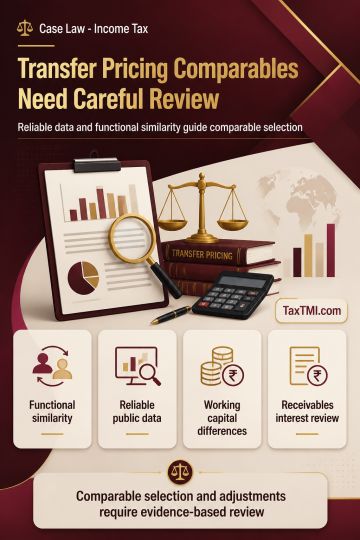
Transfer pricing comparability requires functional alignment, reliable financial data, and careful review of working capital and receivables adjustmen...
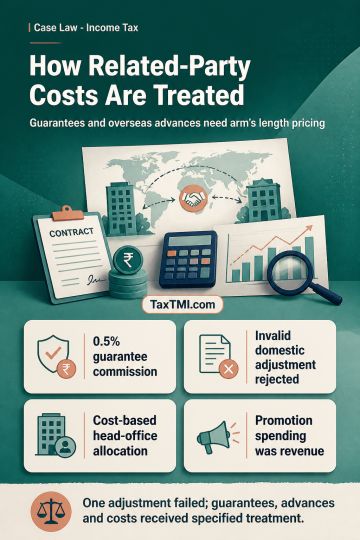
Transfer pricing rules require benchmarking corporate guarantees and associated-enterprise advances, while invalid domestic-transaction adjustments ca...
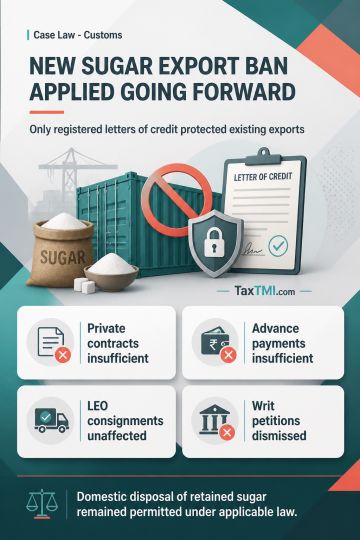
Prospective sugar export prohibition required registered letters of credit; private contracts and export quotas created no enforceable continuation ri...
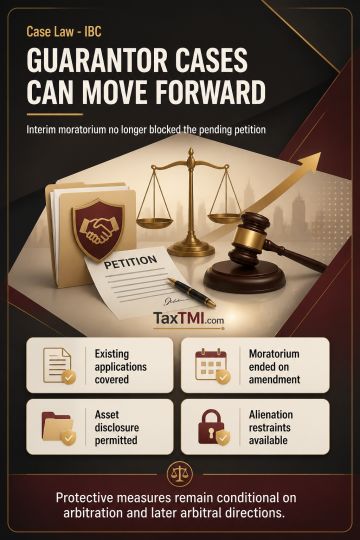
Retroactive interim-moratorium exclusion permits protective asset disclosure and preservation measures against personal guarantors pending arbitration...
The case involved the forfeiture of a security deposit under regulation 20 of the Customs House Agents' Licencing Regulations, 2014 due to breaches of regulations 13(a), 13(d), and 13(e). The issue was raised by a custom house agent before the High Court of Bombay, with the Commissioner of Customs arguing against the appeal's maintainability before the Tribunal due to limitations in the governing regulations. The Learned Authorised Representative's changed stance was deemed inconsistent and inconsequential in light of the High Court's decision in a previous case. The High Court of Bombay held that the appellate remedy for customs brokers is limited by the governing regulations, making general appeal provisions inapplicable. The decision was binding, leading to the dismissal of the appeal by the Appellate Tribunal (CESTAT).
The case involved the forfeiture of a security deposit under regulation 20 of the Customs House Agents' Licencing Regulations, 2014 due to breaches of regulations 13(a), 13(d), and 13(e). The issue was raised by a custom house agent before the High Court of Bombay, with the Commissioner of Customs arguing against the appeal's maintainability before the Tribunal due to limitations in the governing regulations. The Learned Authorised Representative's changed stance was deemed inconsistent and inconsequential in light of the High Court's decision in a previous case. The High Court of Bombay held that the appellate remedy for customs brokers is limited by the governing regulations, making general appeal provisions inapplicable. The decision was binding, leading to the dismissal of the appeal by the Appellate Tribunal (CESTAT).
Note: It is a system-generated summary and is for quick reference only.
 TaxTMI
 of 4782









 Join Channel


 TaxTMI