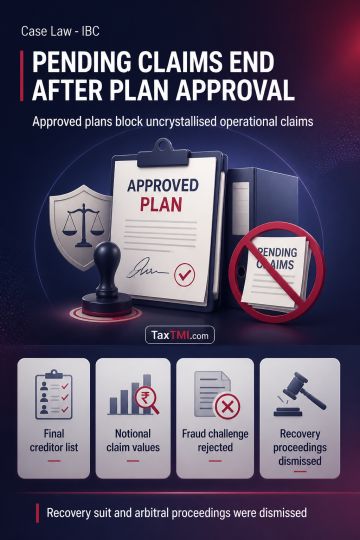
Clean slate principle extinguishes uncrystallised operational claims and bars continuation of pending recovery and arbitral proceedings after plan app...
Works contract classification governs composite layout-development contracts where VAT-paid goods are transferred alongside construction and infrastru...
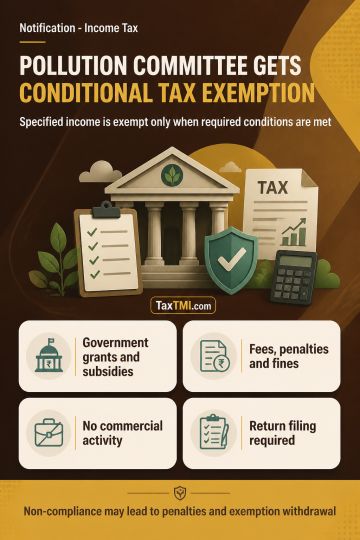
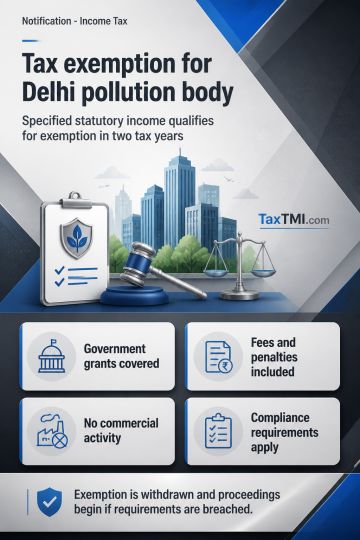
Specified income tax exemption for pollution control body remains conditional on non-commercial activity, unchanged income character, and return filin...
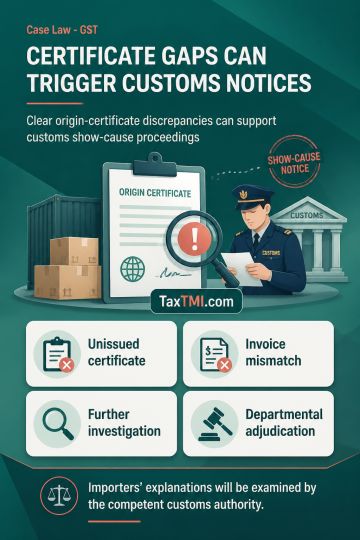
Jurisdictional facts in certificate-of-origin discrepancies can support customs show-cause proceedings, leaving factual explanations for departmental ...
The case involved the forfeiture of a security deposit under regulation 20 of the Customs House Agents' Licencing Regulations, 2014 due to breaches of regulations 13(a), 13(d), and 13(e). The issue was raised by a custom house agent before the High Court of Bombay, with the Commissioner of Customs arguing against the appeal's maintainability before the Tribunal due to limitations in the governing regulations. The Learned Authorised Representative's changed stance was deemed inconsistent and inconsequential in light of the High Court's decision in a previous case. The High Court of Bombay held that the appellate remedy for customs brokers is limited by the governing regulations, making general appeal provisions inapplicable. The decision was binding, leading to the dismissal of the appeal by the Appellate Tribunal (CESTAT).
The case involved the forfeiture of a security deposit under regulation 20 of the Customs House Agents' Licencing Regulations, 2014 due to breaches of regulations 13(a), 13(d), and 13(e). The issue was raised by a custom house agent before the High Court of Bombay, with the Commissioner of Customs arguing against the appeal's maintainability before the Tribunal due to limitations in the governing regulations. The Learned Authorised Representative's changed stance was deemed inconsistent and inconsequential in light of the High Court's decision in a previous case. The High Court of Bombay held that the appellate remedy for customs brokers is limited by the governing regulations, making general appeal provisions inapplicable. The decision was binding, leading to the dismissal of the appeal by the Appellate Tribunal (CESTAT).
Note: It is a system-generated summary and is for quick reference only.
 TaxTMI
 of 4792








 Join Channel


 TaxTMI