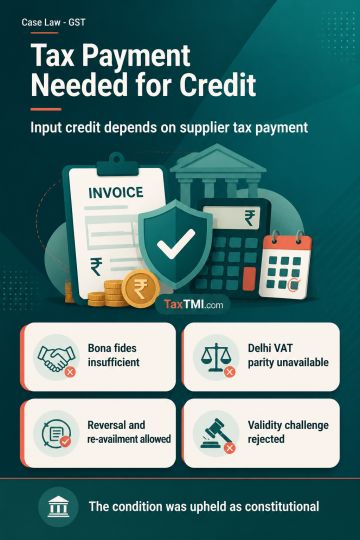
Input tax credit conditions remain constitutionally valid, with eligible recipient claims considered under GST circulars and retrospective filing dead...
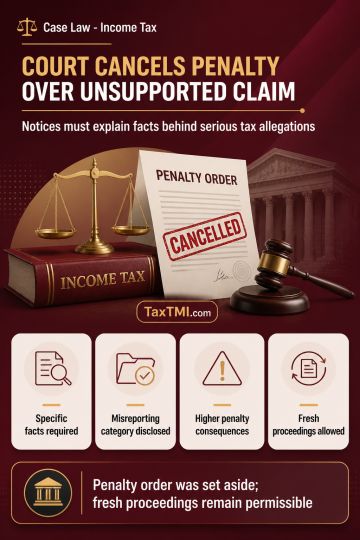
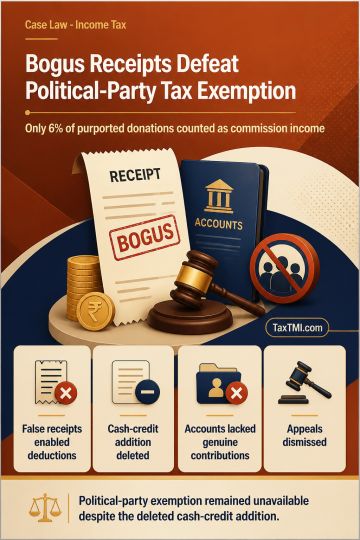
Bogus donation receipts justified commission income assessment and defeated political-party tax exemption for inaccurate accounts and reporting failur...
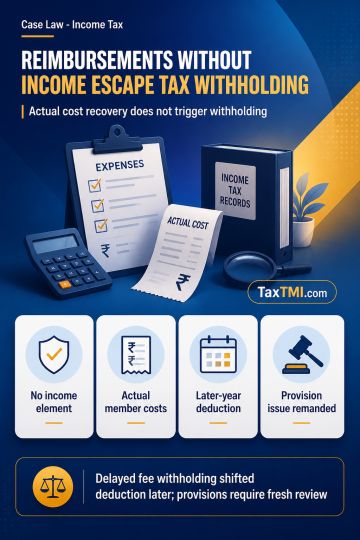
Pure reimbursement without income element escapes tax withholding, while delayed withholding and unsupported provisions face deferred or renewed scrut...
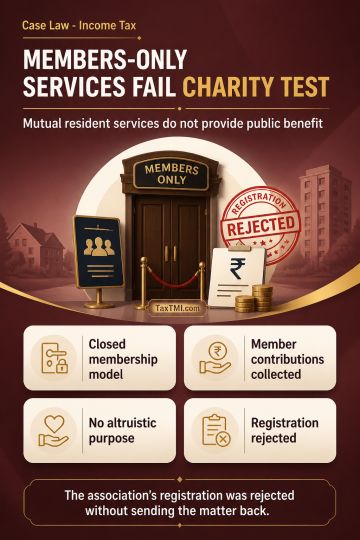
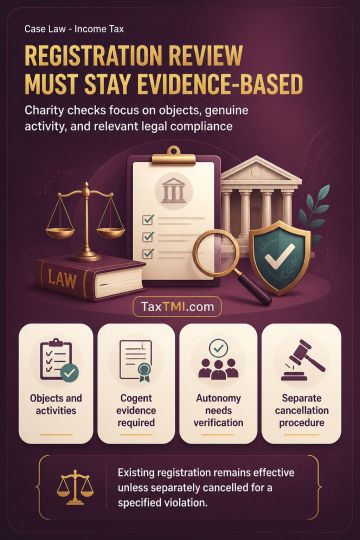
Public benefit requirement defeats charitable registration where residents' association services are reciprocal, member-only facilities governed by mu...
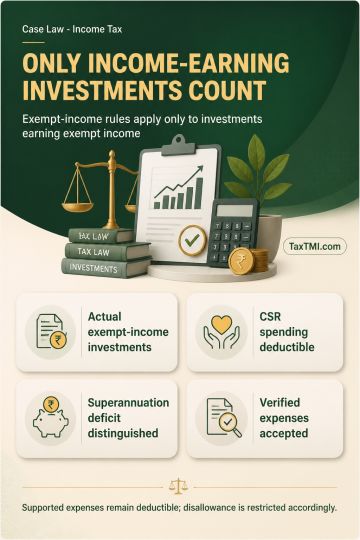
Exempt-income expenditure disallowance is confined to investments that actually generated exempt income, while supported business expenses remain dedu...
The case involved the forfeiture of a security deposit under regulation 20 of the Customs House Agents' Licencing Regulations, 2014 due to breaches of regulations 13(a), 13(d), and 13(e). The issue was raised by a custom house agent before the High Court of Bombay, with the Commissioner of Customs arguing against the appeal's maintainability before the Tribunal due to limitations in the governing regulations. The Learned Authorised Representative's changed stance was deemed inconsistent and inconsequential in light of the High Court's decision in a previous case. The High Court of Bombay held that the appellate remedy for customs brokers is limited by the governing regulations, making general appeal provisions inapplicable. The decision was binding, leading to the dismissal of the appeal by the Appellate Tribunal (CESTAT).
The case involved the forfeiture of a security deposit under regulation 20 of the Customs House Agents' Licencing Regulations, 2014 due to breaches of regulations 13(a), 13(d), and 13(e). The issue was raised by a custom house agent before the High Court of Bombay, with the Commissioner of Customs arguing against the appeal's maintainability before the Tribunal due to limitations in the governing regulations. The Learned Authorised Representative's changed stance was deemed inconsistent and inconsequential in light of the High Court's decision in a previous case. The High Court of Bombay held that the appellate remedy for customs brokers is limited by the governing regulations, making general appeal provisions inapplicable. The decision was binding, leading to the dismissal of the appeal by the Appellate Tribunal (CESTAT).
Note: It is a system-generated summary and is for quick reference only.
 TaxTMI
 of 4782






 Join Channel


 TaxTMI