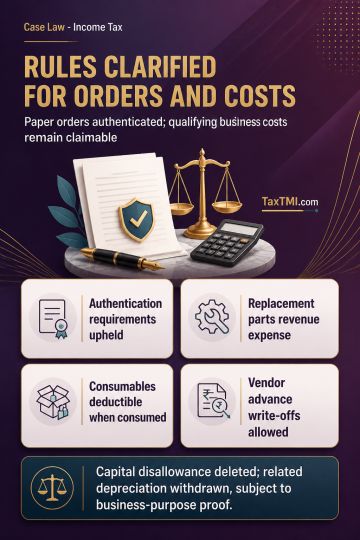
Authentication of paper assessment orders upheld, while qualifying repairs, consumables and vendor advance write-offs remain deductible business claim...
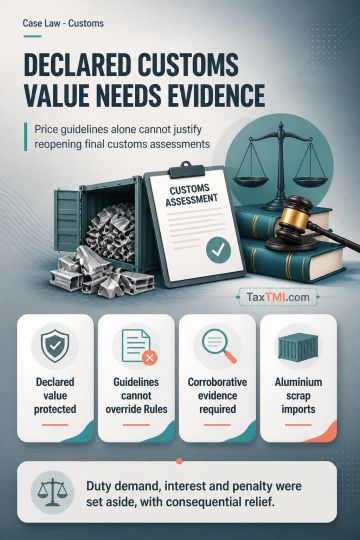
Transaction value cannot be rejected solely on non-statutory valuation guidelines without corroborative evidence supporting reassessment of final cust...
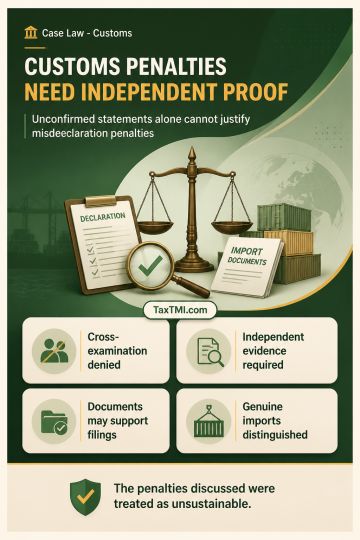
Cross-examination rights and corroborated evidence limit customs penalties for misdeclaration in genuine import transactions involving documented clea...
Page of 4782
Press 'Enter' after typing page number.
301 to 320 of 95636 Results
❮
❯
❯❯
0 / 200
Expand Note
Add to Folder
No Folders have been created
+
Are you sure you want to delete "My most important" ?
The case involved the forfeiture of a security deposit under regulation 20 of the Customs House Agents' Licencing Regulations, 2014 due to breaches of regulations 13(a), 13(d), and 13(e). The issue was raised by a custom house agent before the High Court of Bombay, with the Commissioner of Customs arguing against the appeal's maintainability before the Tribunal due to limitations in the governing regulations. The Learned Authorised Representative's changed stance was deemed inconsistent and inconsequential in light of the High Court's decision in a previous case. The High Court of Bombay held that the appellate remedy for customs brokers is limited by the governing regulations, making general appeal provisions inapplicable. The decision was binding, leading to the dismissal of the appeal by the Appellate Tribunal (CESTAT).
The case involved the forfeiture of a security deposit under regulation 20 of the Customs House Agents' Licencing Regulations, 2014 due to breaches of regulations 13(a), 13(d), and 13(e). The issue was raised by a custom house agent before the High Court of Bombay, with the Commissioner of Customs arguing against the appeal's maintainability before the Tribunal due to limitations in the governing regulations. The Learned Authorised Representative's changed stance was deemed inconsistent and inconsequential in light of the High Court's decision in a previous case. The High Court of Bombay held that the appellate remedy for customs brokers is limited by the governing regulations, making general appeal provisions inapplicable. The decision was binding, leading to the dismissal of the appeal by the Appellate Tribunal (CESTAT).
Note: It is a system-generated summary and is for quick reference only.
 TaxTMI
 of 4782







 Join Channel


 TaxTMI