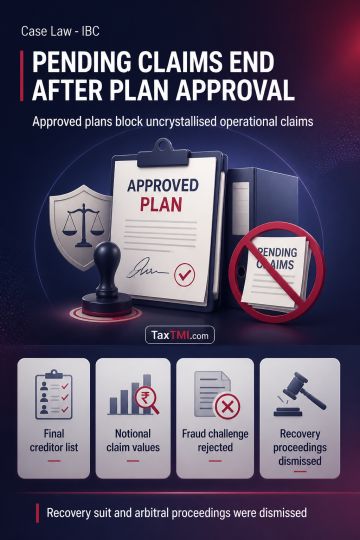
Clean slate principle extinguishes uncrystallised operational claims and bars continuation of pending recovery and arbitral proceedings after plan app...
Works contract classification governs composite layout-development contracts where VAT-paid goods are transferred alongside construction and infrastru...
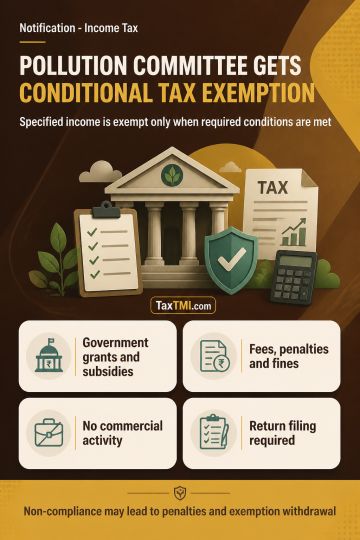
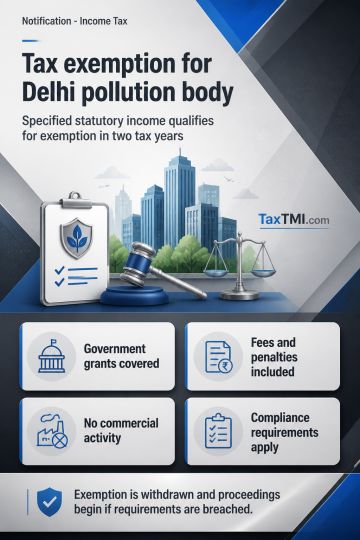
Specified income tax exemption for pollution control body remains conditional on non-commercial activity, unchanged income character, and return filin...
Jurisdictional facts in certificate-of-origin discrepancies can support customs show-cause proceedings, leaving factual explanations for departmental ...
The High Court held that rejection of the application u/s 233 of...
Court says rejection of scheme of amalgamation application under Companies Act not justified. Govt must apply to Tribunal if scheme not in public interest.
Contents
Summary
Note
Bookmark
Share
✓ Copied successfully !
Print
Print Options
For full text, please login
Login to TaxTMI
Verification Pending
The Email Id has not been verified. Click on the link we have sent on
The High Court held that rejection of the application u/s 233 of the Companies Act, 2013, for processing a scheme of amalgamation was not justified. The Court emphasized that if the Government deems a scheme not in public interest or creditors' interest, it must apply to the Tribunal for adjudication. In this case, as the declaration of solvency was filed and the scheme was approved, respondent should have followed the prescribed procedure by making an application to the Tribunal if any condition was not satisfied. The Court found the rejection order to be legally flawed and quashed it, disposing of the petition.
The High Court held that rejection of the application u/s 233 of the Companies Act, 2013, for processing a scheme of amalgamation was not justified. The Court emphasized that if the Government deems a scheme not in public interest or creditors' interest, it must apply to the Tribunal for adjudication. In this case, as the declaration of solvency was filed and the scheme was approved, respondent should have followed the prescribed procedure by making an application to the Tribunal if any condition was not satisfied. The Court found the rejection order to be legally flawed and quashed it, disposing of the petition.
Note: It is a system-generated summary and is for quick reference only.
 TaxTMI
 of 4792











 Join Channel


 TaxTMI