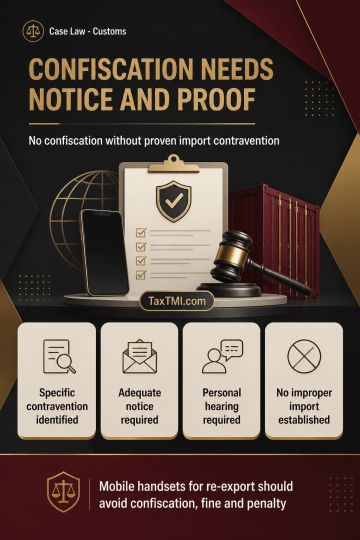
Arrest safeguards require disclosed grounds, relative intimation and transit remand, while duplicate prosecution under the CGST framework is unsustain...
Document Identification Number defects can invalidate GST assessments, with delayed challenges entertained conditionally where patent irregularities e...
Windmill commissioning evidence supported higher depreciation where grid connection and electricity generation proved operational use before the relev...
Pharmaceutical promotion and transfer-pricing comparability principles limited disallowances, while uncorroborated search allegations and unsupported ...
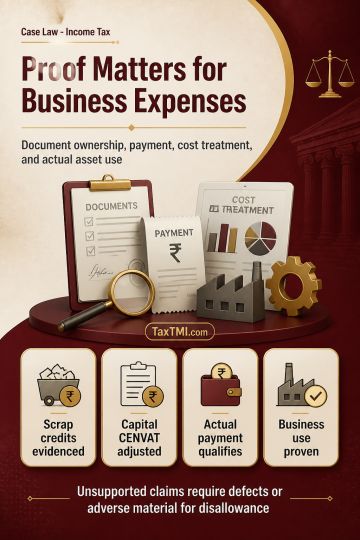
Business expenditure substantiation supports scrap credits, statutory payments and expense claims, while depreciation requires proof of actual busines...
The High Court held that rejection of the application u/s 233 of...
Court says rejection of scheme of amalgamation application under Companies Act not justified. Govt must apply to Tribunal if scheme not in public interest.
Contents
Summary
Note
Bookmark
Share
✓ Copied successfully !
Print
Print Options
For full text, please login
Login to TaxTMI
Verification Pending
The Email Id has not been verified. Click on the link we have sent on
The High Court held that rejection of the application u/s 233 of the Companies Act, 2013, for processing a scheme of amalgamation was not justified. The Court emphasized that if the Government deems a scheme not in public interest or creditors' interest, it must apply to the Tribunal for adjudication. In this case, as the declaration of solvency was filed and the scheme was approved, respondent should have followed the prescribed procedure by making an application to the Tribunal if any condition was not satisfied. The Court found the rejection order to be legally flawed and quashed it, disposing of the petition.
The High Court held that rejection of the application u/s 233 of the Companies Act, 2013, for processing a scheme of amalgamation was not justified. The Court emphasized that if the Government deems a scheme not in public interest or creditors' interest, it must apply to the Tribunal for adjudication. In this case, as the declaration of solvency was filed and the scheme was approved, respondent should have followed the prescribed procedure by making an application to the Tribunal if any condition was not satisfied. The Court found the rejection order to be legally flawed and quashed it, disposing of the petition.
Note: It is a system-generated summary and is for quick reference only.
 TaxTMI
 of 4788


















 Join Channel


 TaxTMI