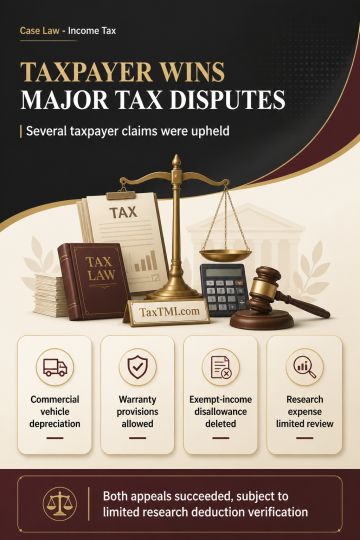
Commercial vehicle depreciation, scientifically determined warranty provisions and exempt-income disallowances were resolved in favour of the taxpayer...
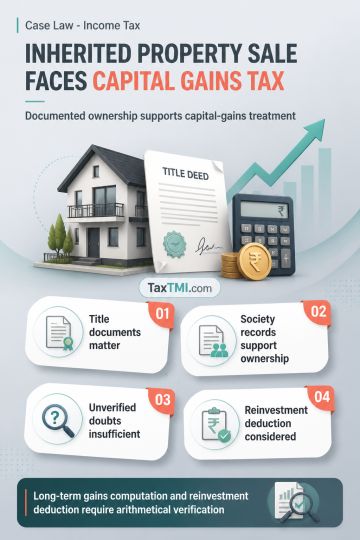
Inherited property sale proceeds require capital-gains treatment where ownership is supported by evidence, not suspicion or unverified signature doubt...
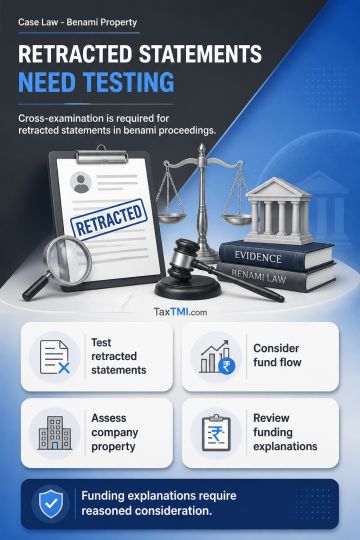
Cross-examination of retracted statements is essential where foundational evidence supports a benami allegation and documented funding explanations re...
Capital-goods exemption covers plant-modernisation accessories, while the import restriction applies only to earlier capital-goods components and spar...
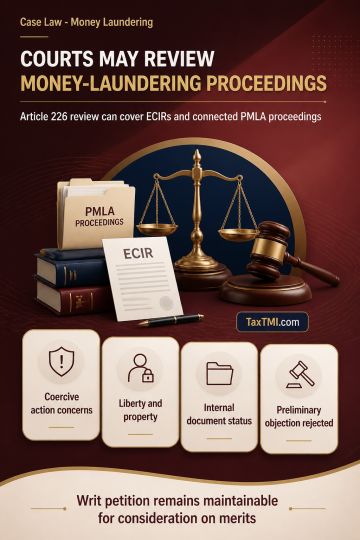
Constitutional judicial review permits challenges to ECIRs and connected money-laundering proceedings where coercive action affects fundamental intere...
The High Court held that rejection of the application u/s 233 of...
Court says rejection of scheme of amalgamation application under Companies Act not justified. Govt must apply to Tribunal if scheme not in public interest.
Contents
Summary
Note
Bookmark
Share
✓ Copied successfully !
Print
Print Options
For full text, please login
Login to TaxTMI
Verification Pending
The Email Id has not been verified. Click on the link we have sent on
The High Court held that rejection of the application u/s 233 of the Companies Act, 2013, for processing a scheme of amalgamation was not justified. The Court emphasized that if the Government deems a scheme not in public interest or creditors' interest, it must apply to the Tribunal for adjudication. In this case, as the declaration of solvency was filed and the scheme was approved, respondent should have followed the prescribed procedure by making an application to the Tribunal if any condition was not satisfied. The Court found the rejection order to be legally flawed and quashed it, disposing of the petition.
The High Court held that rejection of the application u/s 233 of the Companies Act, 2013, for processing a scheme of amalgamation was not justified. The Court emphasized that if the Government deems a scheme not in public interest or creditors' interest, it must apply to the Tribunal for adjudication. In this case, as the declaration of solvency was filed and the scheme was approved, respondent should have followed the prescribed procedure by making an application to the Tribunal if any condition was not satisfied. The Court found the rejection order to be legally flawed and quashed it, disposing of the petition.
Note: It is a system-generated summary and is for quick reference only.
 TaxTMI
 of 4780












 Join Channel


 TaxTMI
